
August 2026
SALKANTAY TREK — From the Andes to MACHU PICCHU
I wanted more than just to visit MACHU PICCHU. I wanted to hike through the Andes and actually make the journey part of the adventure.
That was how I ended up choosing the SALKANTAY TREK, one of the popular multi-day trekking routes to MACHU PICCHU. The trek takes you from the high Andes, over the spectacular SALKANTAY PASS, through cloud forests and lush valleys, and eventually to MACHU PICCHU.
It sounded amazing on paper.
It also sounded like a lot of walking.
And, as I would soon discover, it was!
A Rocky Start to the Booking
At first, I booked with Machu Picchu Reservations because they were extremely cheap and seemed to have plenty of previous customers. I thought, Well, maybe it will be a bigger group and less luxurious, but that shouldn’t matter.
Then, about a month after booking—and after I had already received my MACHU PICCHU entrance ticket—I started receiving emails from former employees saying that the company was going bankrupt.
Not exactly the kind of email you want to receive before a once-in-a-lifetime trip!
Eventually, the company refunded my money without me even asking, except for the MACHU PICCHU ticket. I was half relieved and half frustrated.
So I rebooked with Salkantay Trekking, a much more expensive but highly reputable company.
I have absolutely no regret about that decision. They delivered on everything: the guide, cook, accommodation, transportation, and overall planning.
And, as it turned out, I would need all of that support!
Getting Ready for Five Days in the Mountains
The night before the trek started, we had a briefing at the company’s office in Cusco and picked up our duffle bags.
The company provided a duffle bag for each of us, which was carried by the horseman from one accommodation to the next. We only had to carry a light daypack while hiking.
The allowance was supposed to be about 5 kg.
Let’s just say I strongly suspected that my bag weighed considerably more than that.
I really need to learn how to pack lighter!
Later, I heard that some cheaper trekking companies did not provide drinking water, meaning trekkers had to buy it along the way. They might also sleep in tents and not necessarily have showers every day.
Suddenly, my expensive tour didn’t seem so expensive anymore.
DAY 1 — RAIN, SNOW & HUMANTAY LAKE
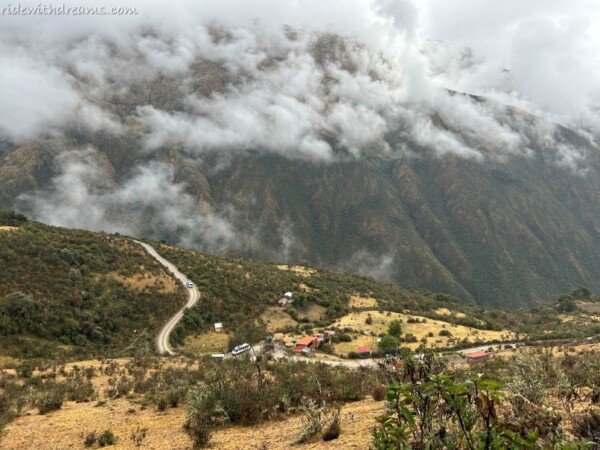
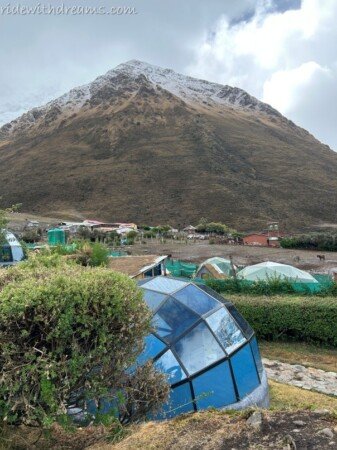
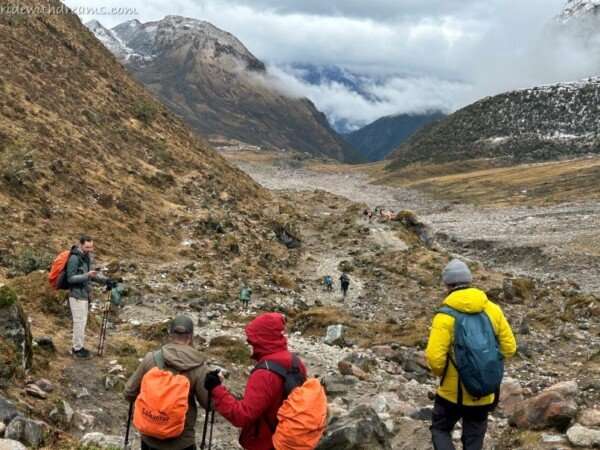
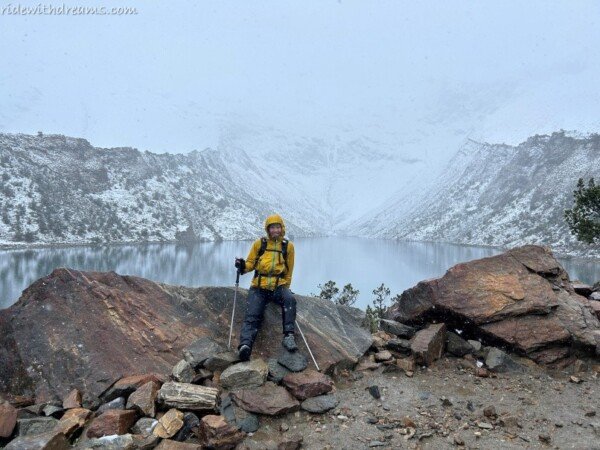
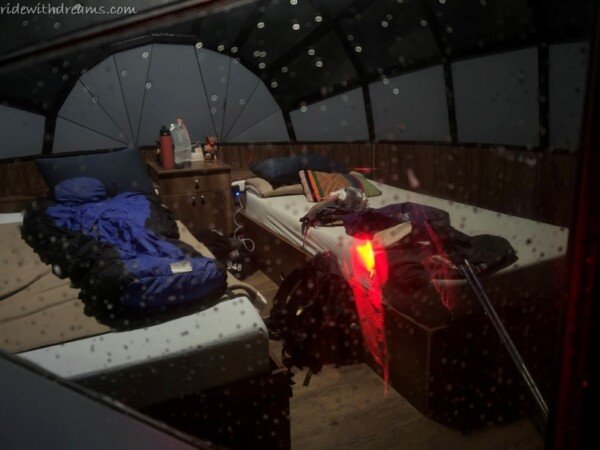
My SALKANTAY TREK began on a cloudy, cool and rainy morning.
After a long drive from Cusco, we started hiking from Challacancha (3,800 m). It was already cold, foggy and wet—definitely not the beautiful sunny Andes scenery I had imagined.
The first 7 km were steep and not easy. By the time I reached our first campsite, Sky Camp at Soraypampa, I was already tired and more than ready to retreat into my dome-shaped room.
Unfortunately, that was not the plan.
After a hearty lunch, we had to put on our warm clothes and head back out for the hike to HUMANTAY LAKE (4,200 m).
It was supposed to be only 1.5 km and about 1.5 hours from our campsite at Soraypampa (3,900 m).
But at that altitude, 1.5 km felt like 15 km.
Breathing was difficult, and walking felt strangely exhausting. Before long, all the much younger members of my group had disappeared from my view.
I simply kept going at my own pace—tiny steps, frequent breaks, and then a little more walking.
Even though I couldn’t see the lake because of the fog, I knew I was heading in the right direction. There were trekkers from many different tours all moving toward the same place.
At least I wasn’t the only slow one!
When the Andes Turned White
It wasn’t just raining anymore.
It was snowing.
The mountains were gradually covered in white, and I was cold, wet and wondering what exactly I had signed up for.
Several times, I thought, Surely the lake must be just over that hill.
But every time I reached the top, there seemed to be another, even higher hill waiting for me.
All I could see ahead were colorful ponchos moving slowly through the snow. I wondered when I would finally arrive.
Eventually, I did.
I reached HUMANTAY LAKE and met my fellow group members. We took a few group photos, and then everyone started heading back down.
And, naturally, they disappeared from my view again.
A Night in the Dome
Our campsite was filled with dome-shaped rooms and looked like a maze to me. I struggled to find the dining room and even the toilet.
It was dark, and there was electricity for only about two or three hours after dark.
The dining room, however, was lovely, with a cozy fireplace. During dinner, trekkers gathered around the fire to dry their soaking-wet clothes and chat about the day’s adventure.
I was exhausted and had a headache from the altitude.
After dinner, I immediately crawled into my sleeping bag, wrapped myself in a blanket and went to sleep.
I was so tired that I didn’t even bother taking off or changing my clothes.
DAY 2 — Salkantay Pass: The Hardest Day
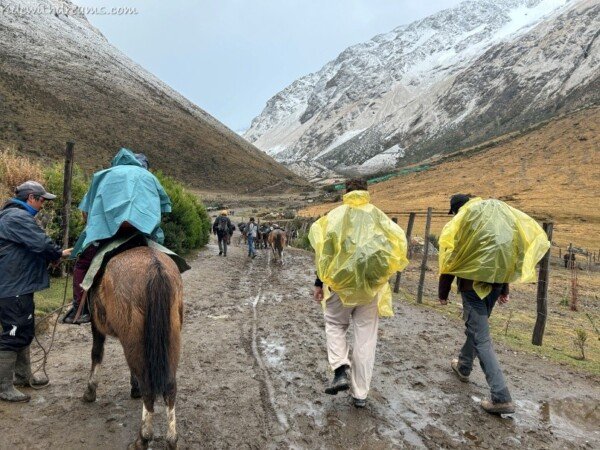
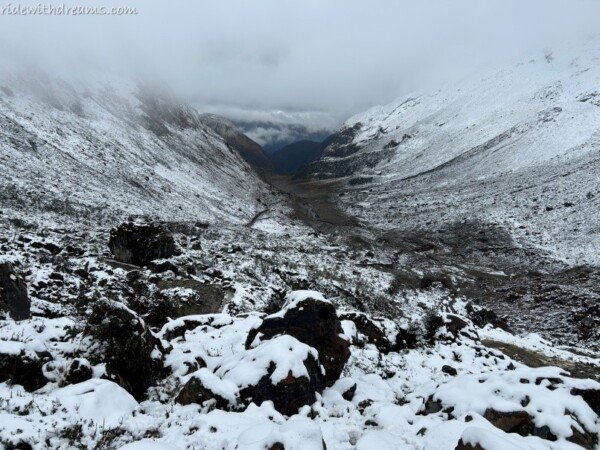
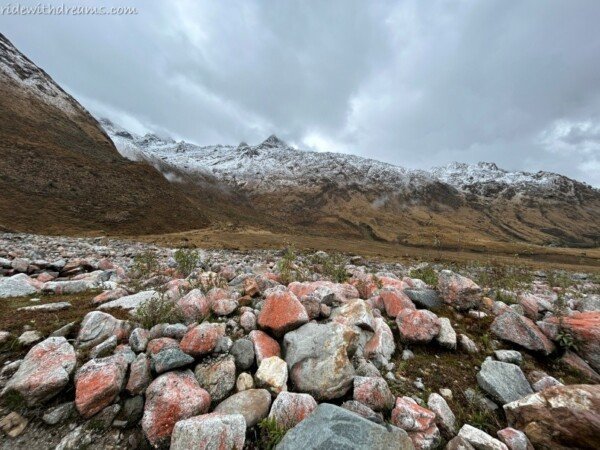
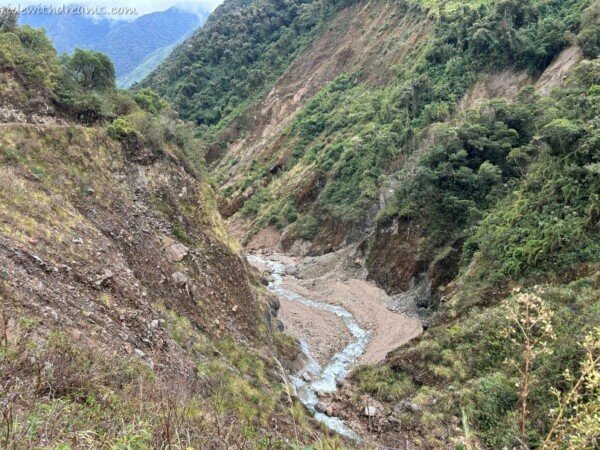
The next morning, waking up in the dark was not easy.
And this was going to be the longest and toughest day of the trek.
Our goal was SALKANTAY PASS (4,630 m), the highest point and one of the highlights of the entire trek, before descending all the way to our second campsite, Mountain Sky View in Collpapampa (2,950 m).
We would hike more than 20 km that day.
Our guide told us that the climb to SALKANTAY PASS would be about three times harder than the hike to HUMANTAY LAKE.
Considering that I was already suffering from a lack of sleep and a headache, I didn’t hesitate for long.
I chose the horse.
It was absolutely the right decision.
Horse Power!
Even on horseback, however, it was difficult.
The trail was long and steep, with a narrow, winding path along the mountainside. And, as if that wasn’t enough, it was snowing heavily.
I was terrified that the horse might slip and fall, so I held onto its back for dear life.
Unfortunately, that meant I couldn’t take any photos of the breathtaking scenery.
At one point, the path became so narrow that I had to get off the horse and walk.
The moment I stepped into the deep snow, I slipped.
My poor horseman had to hold the horse’s rope with one hand while pulling me back up with the other.
Not exactly the graceful mountain adventure I had imagined!
Eventually, I had to walk the remaining uphill section and then descend on foot.
The snow was slippery, and several times I wished I had brought better hiking boots—or even crampons. I also had to cross some shallow rivers, and it was so cold that I couldn’t even tell whether my socks were wet or dry anymore.
I continued walking, mostly alone, occasionally passing other trekkers from different groups, until I finally reached our lunch meeting point—a tent in the middle of the mountains.
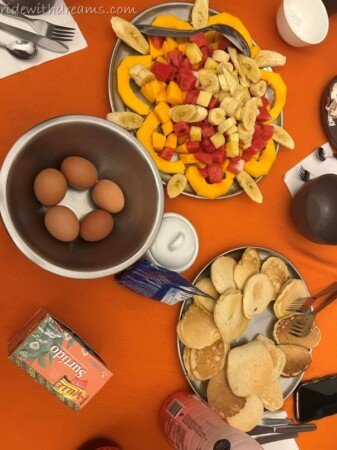
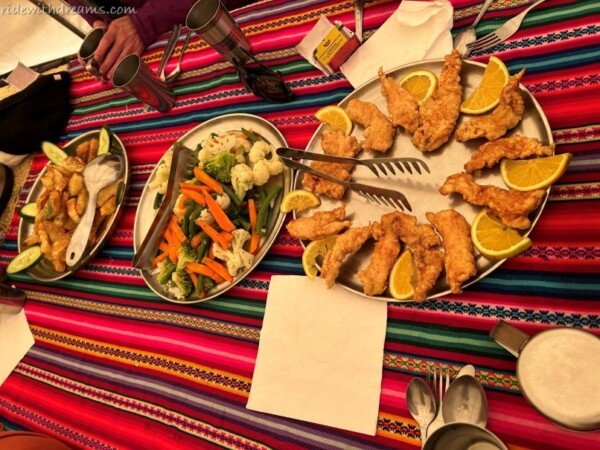
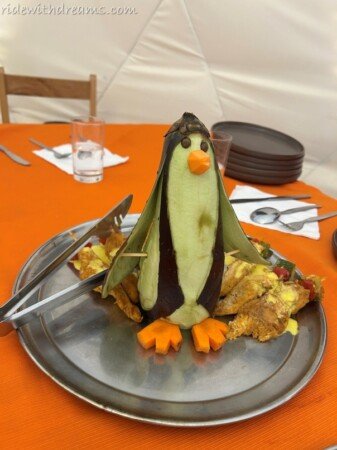
The Best Food of the Trip
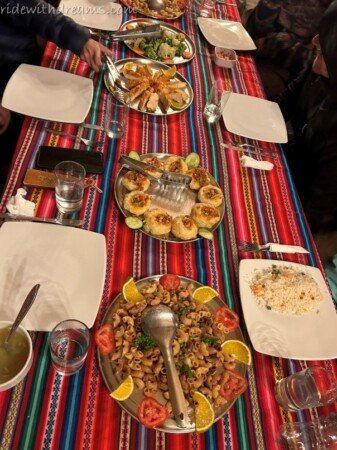
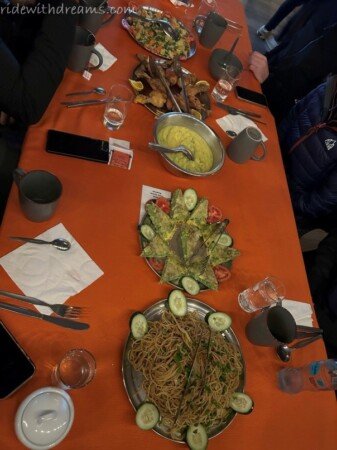
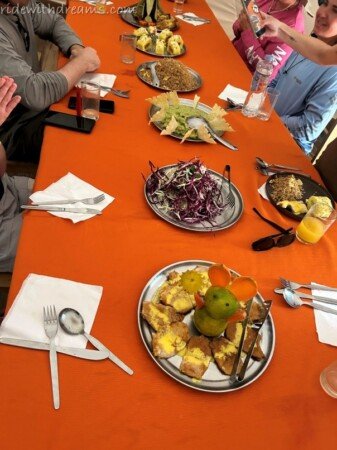
One thing that kept me going throughout the trek was the food.
Our cook always arrived before us, with all the ingredients carried by horse, and somehow managed to prepare lunch and dinner before we arrived.
Breakfast came with plenty of fruit, bread or pancakes, coffee and tea.
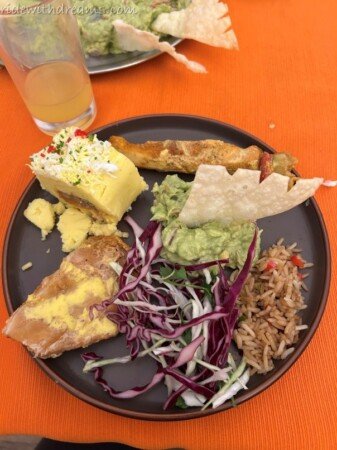
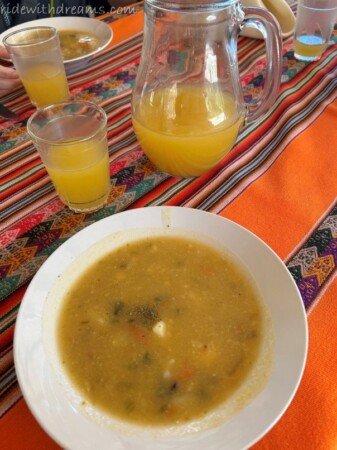
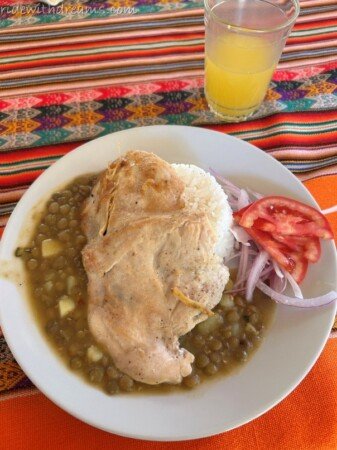
Lunch and dinner were surprisingly elaborate, with vegetables, meat, pasta or rice—usually at least five or six different dishes, often including soup and dessert.
My favorite was the warm Peruvian vegetable soup with quinoa. After hours of hiking in the cold, it was exactly what my stomach needed.
And the food kept getting better.
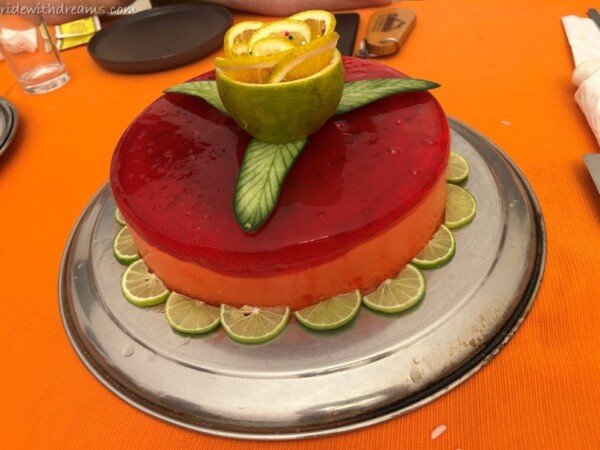
For our final dinner, our cook even made a cake with fruit jelly and cream.
After several days in the mountains, it felt like a five-star dessert!

Finally, a Warm Shower
After lunch, we still had to continue toward our campsite.
By that point, I really didn’t want to walk alone anymore, so I joined a mother and daughter from our group. It slowed me down a little, but it was much nicer to have someone to walk with.
At the very end, we even took a car ride to the campsite.
No regrets whatsoever.
I had already walked around 20 km that day!
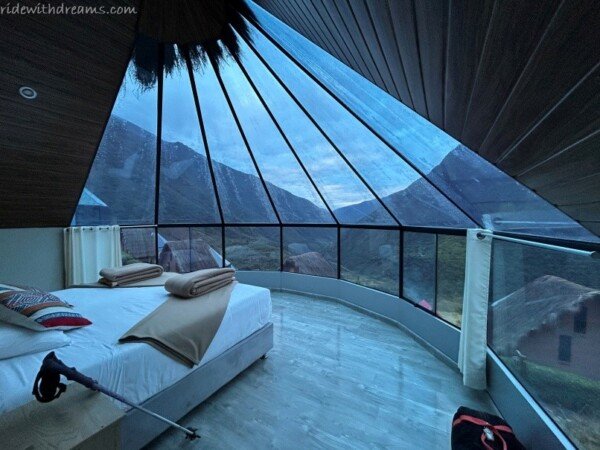
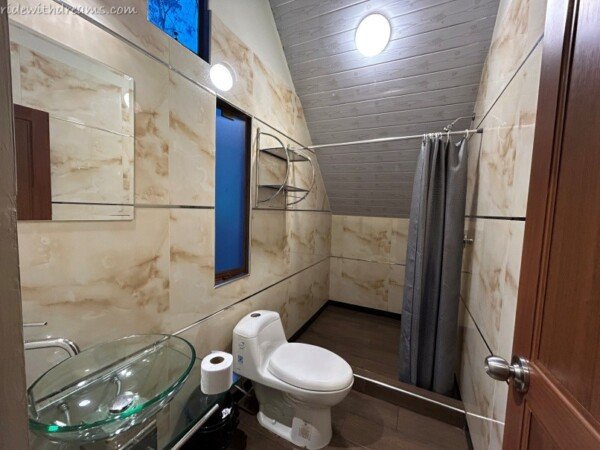
Mountain Sky View in Collpapampa was gorgeous, and my room felt incredibly luxurious after such a brutal day. I finally had a warm shower and a soft, warm bed.
Best of all, the altitude was significantly lower, so my headache disappeared.
That night, I slept very well and finally felt like I was recovering.
DAY 3 — Cloud Forest, Coffee & a Hot Spring
Compared with the previous day, Day 3 was almost a vacation.
It was the easiest and shortest day of the trek.
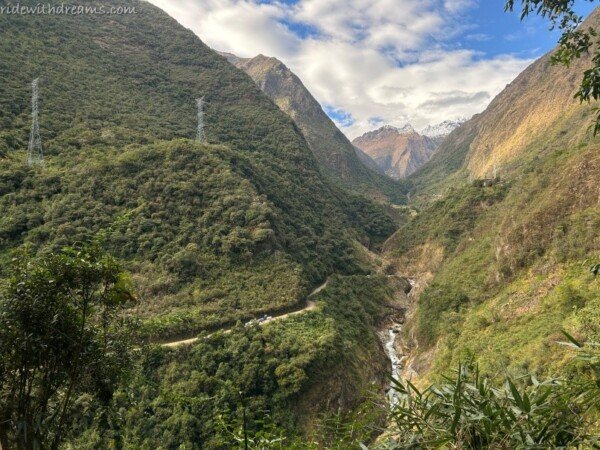
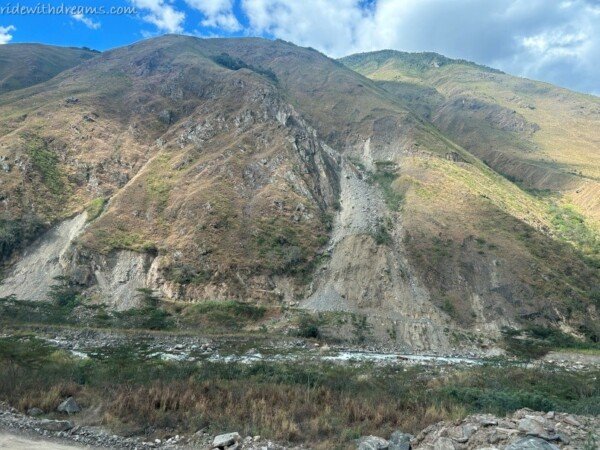
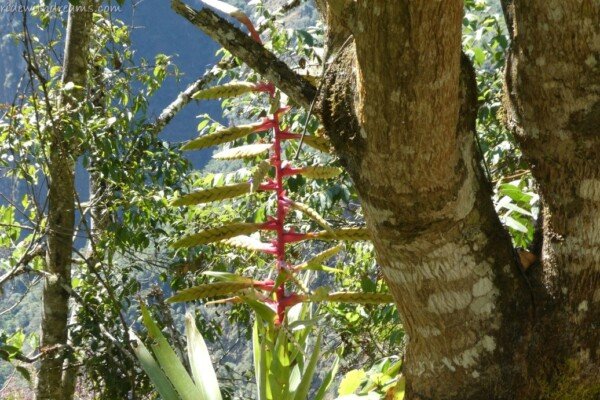
Again, we woke up in the dark and started walking, but this time we passed through the beautiful Cloud Forest, a fruit garden, and eventually stopped for coffee tasting at Playa Sahuayaco (2,060 m).
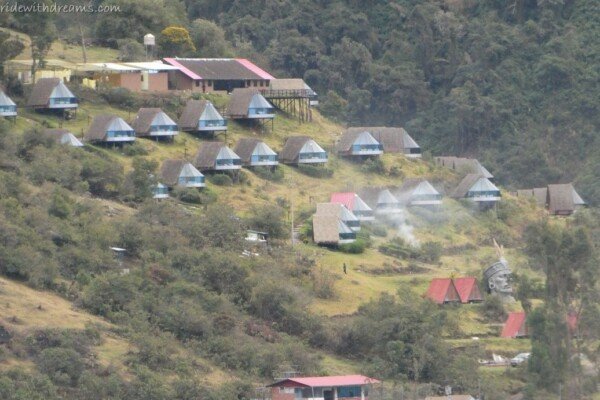
By noon, we had already completed our 18 km walk and reached Jungle Domes in Lucmabamba (2,000 m).
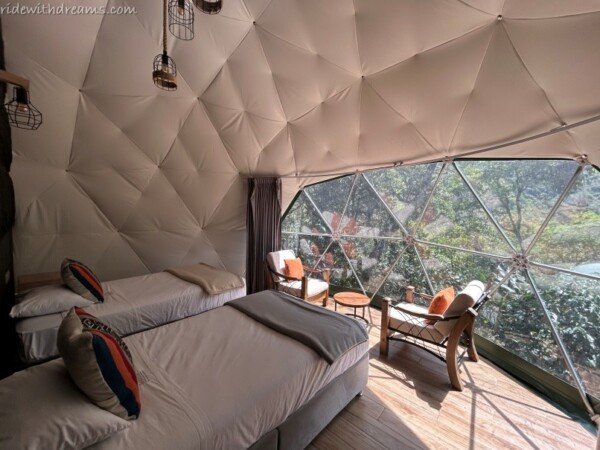
My dome-shaped room was gorgeous and even had a private bathroom and toilet.
There was just one problem.
It was so sunny and hot that the room became a sauna during the day.
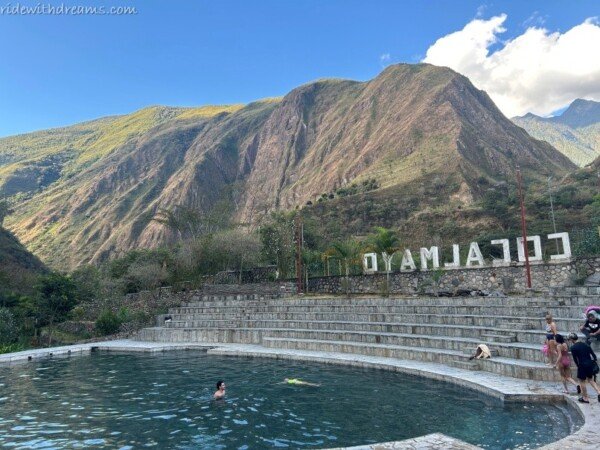
I spread all my wet clothes across the floor to dry and then joined the rest of the group for a trip to the hot spring.
The Hot Spring… and the Sandflies
Initially, I wasn’t planning to go.
The shuttle bus and entrance required an extra fee, and I wasn’t completely convinced about the cleanliness of an outdoor hot spring.
But everyone else in my group was going.
And my room was basically a sauna.
So I went.
I’m still not sure whether that was a good decision.
I absolutely enjoyed the ride through the jungle and relaxing in the hot spring with my group.
But I had not expected the sandflies.
They attacked me mercilessly.
I think I had almost a hundred bites on my legs, with some on my arms and body too—partly because I was wearing a swimsuit.
The bites were incredibly itchy and took months to heal.
So, yes, the hot spring was relaxing.
The sandflies, however, had other plans.
DAY 4 — LLACTAPATA & The Long Walk to Aguas Calientes
After the relatively easy third day, Day 4 brought another long hike.
Our guide warned us that the morning would involve a long, steep downhill section, so two ladies in our group decided to take a car instead.
I was determined to walk.
And I did.
I fell behind the others, but eventually completed the 12 km walk and arrived at Aobamba (1,900 m) for lunch as planned.
So I suppose I wasn’t that slow after all!
One of the highlights of the morning was passing LLACTAPATA (2,700 m).
LLACTAPATA — A Hidden Inca Treasure with a View
LLACTAPATA is a lesser-known Inca archaeological site tucked away in the mountains near MACHU PICCHU. Perched on a ridge across the valley, it offers an incredible view toward MACHU PICCHU—without the crowds.
The site is believed to have been an important Inca settlement and ceremonial complex, with terraces and stone structures built into the steep mountainside.
For me, it felt like discovering a secret viewpoint of MACHU PICCHU—a place where ancient ruins, dramatic Andes scenery and a little bit of adventure came together.
I’m glad I didn’t take the car that morning.
The Never-Ending Railway Walk
The afternoon was, to me, much more difficult—not because it was physically challenging, but because it was long and boring.
We walked along the railway from Hidroelectrica (1,800 m) to Aguas Calientes (2,040 m).
The distance was about 11 km, taking roughly three hours.
After days of mountain scenery, walking beside a railway for hours felt surprisingly uneventful.
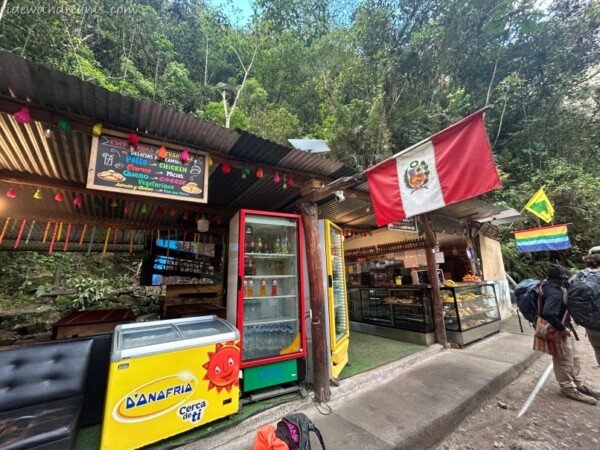
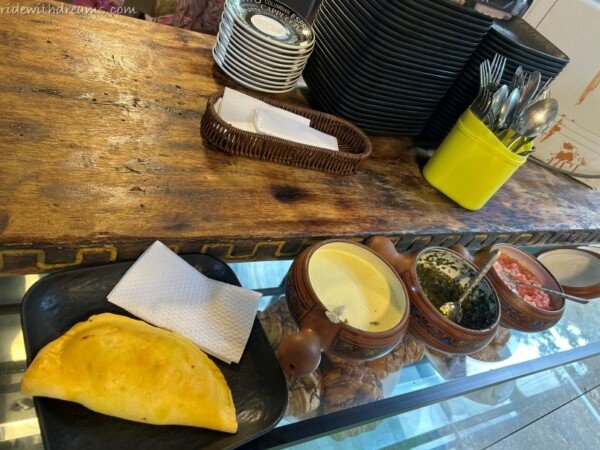
Luckily, we stopped at a small store along the way, where I bought a delicious empanada and enjoyed it with various sauces.
A little snack can make a surprisingly big difference when you’re tired!
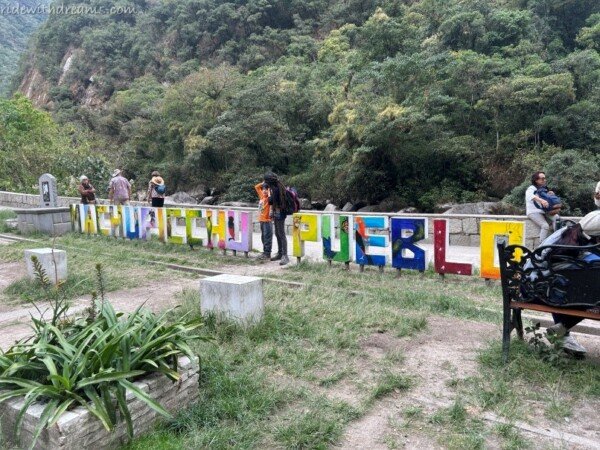
AGUAS CALIENTES — The Gateway to MACHU PICCHU
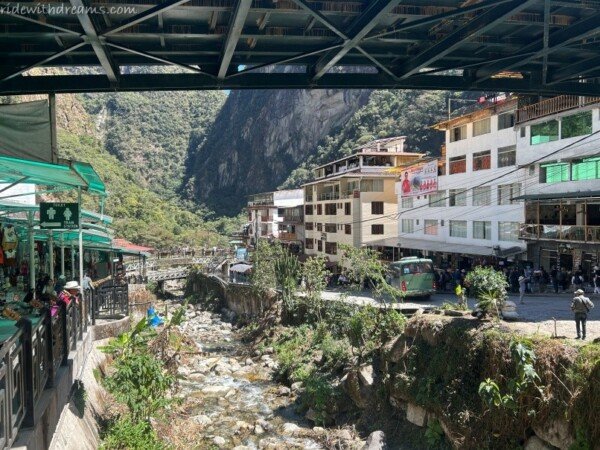
Tucked deep in the mountains at the end of the railway line, AGUAS CALIENTES is the small town that serves as the gateway to MACHU PICCHU.
Surrounded by steep green mountains and the rushing Urubamba River, it feels almost completely cut off from the outside world.
There isn’t much to the town itself, but that is part of its charm. Most travelers arrive by train, spend a night or two, and then head up to MACHU PICCHU early the next morning.
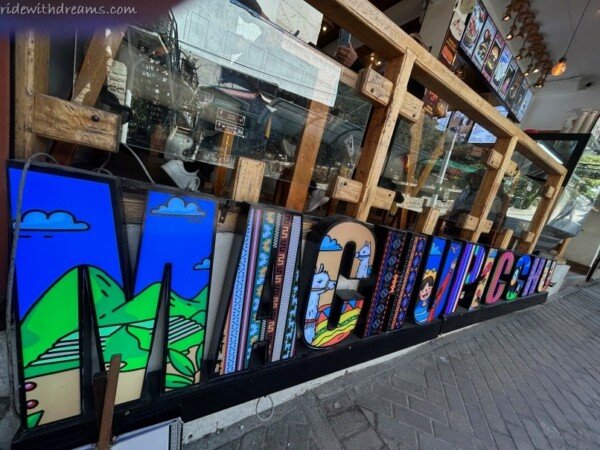
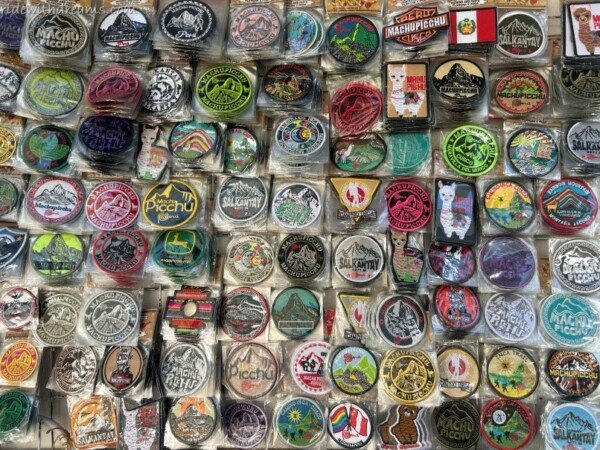
With its narrow streets, restaurants, souvenir shops and constant flow of travelers, AGUAS CALIENTES has a lively little atmosphere despite its remote location.
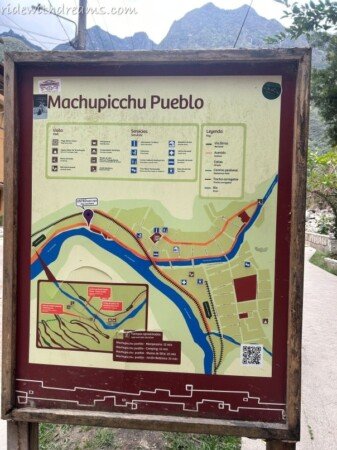
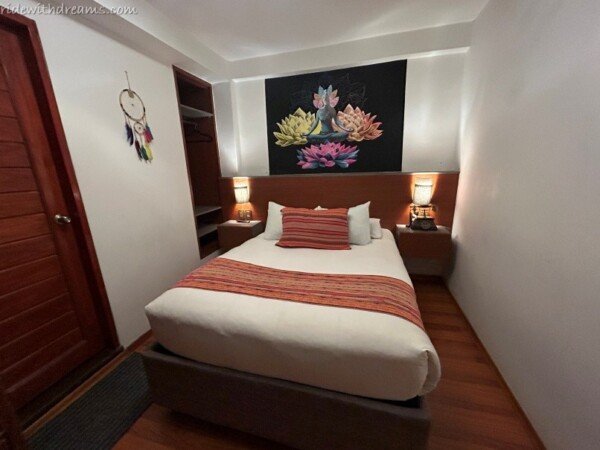
I stayed at Chakana Boutique Hotel, a little away from the center but conveniently close to the bus station for MACHU PICCHU. The room was cute, although quite small.
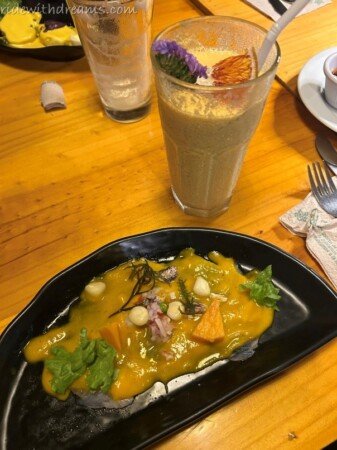
As it was our final night of the SALKANTAY TREK, our group went out for dinner at a nice restaurant. It was a little pricey, but the food was delicious and there was live music.
Unfortunately, I couldn’t fully enjoy my last evening.
The sandfly bites were at their absolute peak.
My legs were so itchy that they haunted me all night.
And then there was another problem.
I had to visit MACHU PICCHU at 6:00 AM the next morning.
The Great Toilet Strategy
There is only a toilet outside the entrance to MACHU PICCHU.
Since I wanted to stay inside as long as possible, I decided I needed to carefully control my liquid intake.
So after dinner, I stopped drinking water.
The next morning, even though breakfast was included, I tried not to drink too much.
Was this a good idea?
Probably not.
Did it work?
Yes.
I managed to stay inside MACHU PICCHU for more than three hours, until almost noon, just like the rest of my group.
And thankfully, having our guide Fredy with us made the experience even more special. As a local guide, he loved explaining the history and details of the site, and he spent hours showing us things I would probably have completely missed on my own.
MACHU PICCHU — A Dream Come True
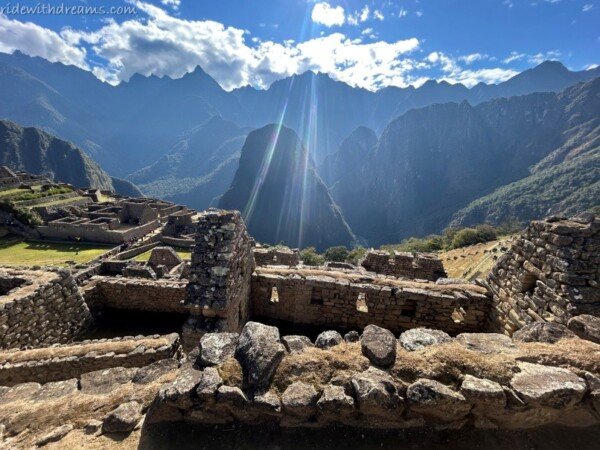
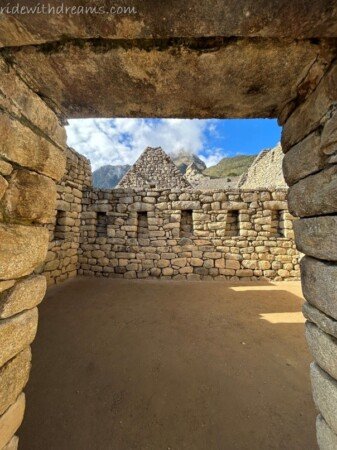
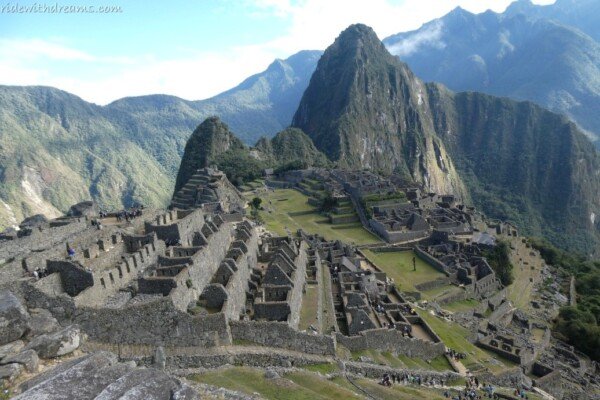
MACHU PICCHU did not disappoint.
After all the planning, traveling, hiking and wondering whether the reality could possibly live up to the pictures, finally standing there was an unforgettable moment.
The ancient Inca city was even more spectacular than I had imagined, surrounded by dramatic green mountains and clouds drifting through the valleys.
And then the sunlight hit the stone structures, making them glow almost golden.
At that moment, I was especially glad I had booked the 6:00 AM entry.
Waking up early was definitely worth it!
The early morning also meant fewer people and a much more magical atmosphere. Watching MACHU PICCHU slowly light up as the morning sun climbed over the mountains felt like the perfect way to finally meet one of the world’s most iconic places.
The Journey Home
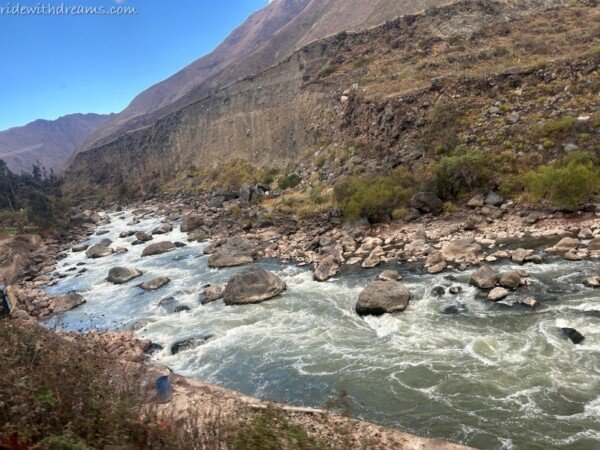
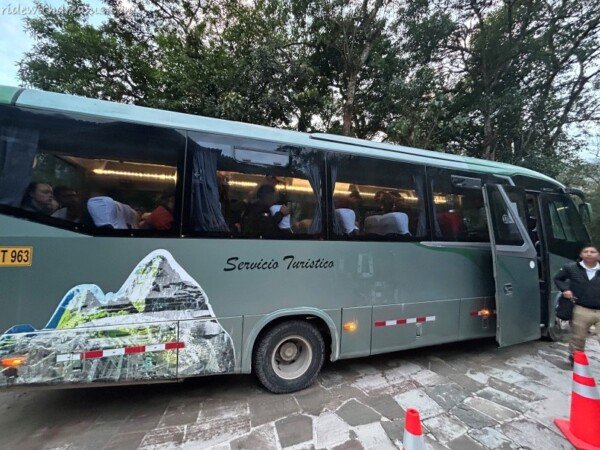
After MACHU PICCHU, we took the bus back to Aguas Calientes for our final lunch together.
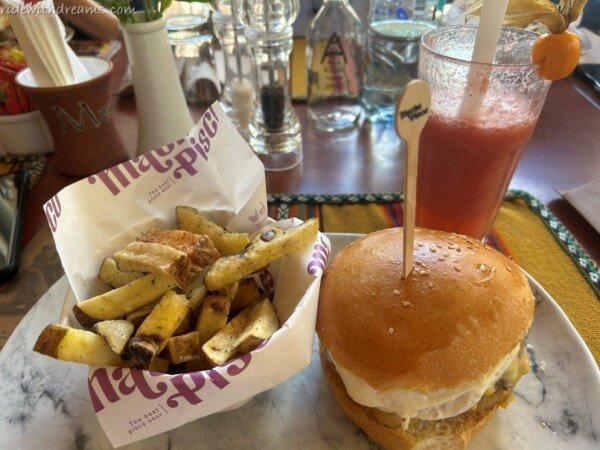
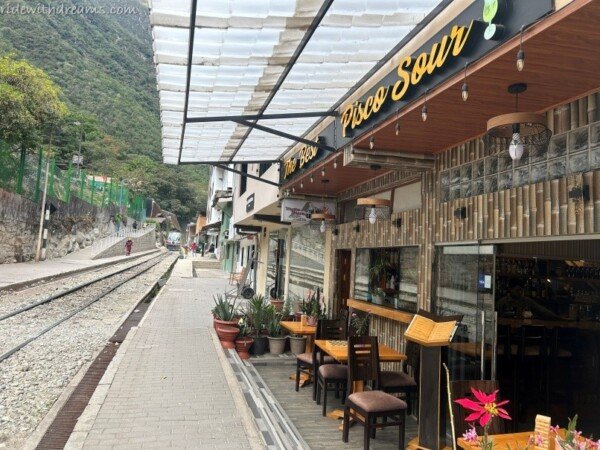
I had an alpaca hamburger—a pretty fitting final meal for my Peruvian adventure.
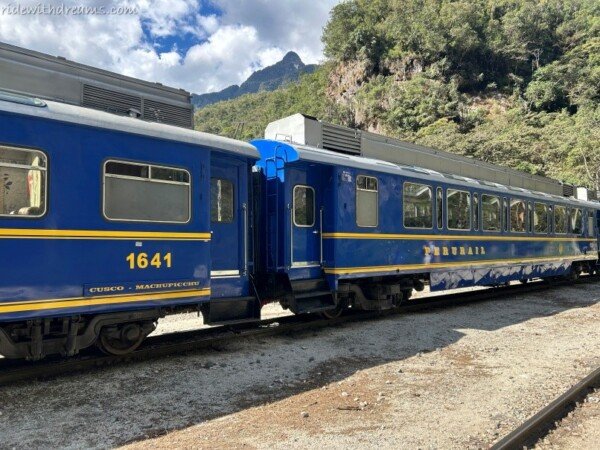
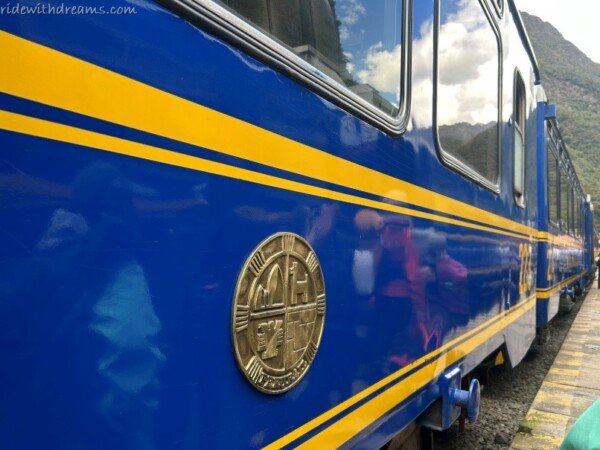
Then we took the PeruRail train to Ollantaytambo (2,792 m), followed by a shuttle bus back to Cusco.
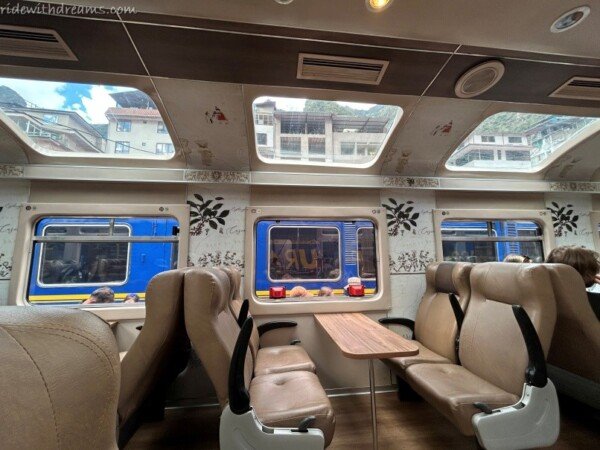
The train ride was much more interesting than I expected.
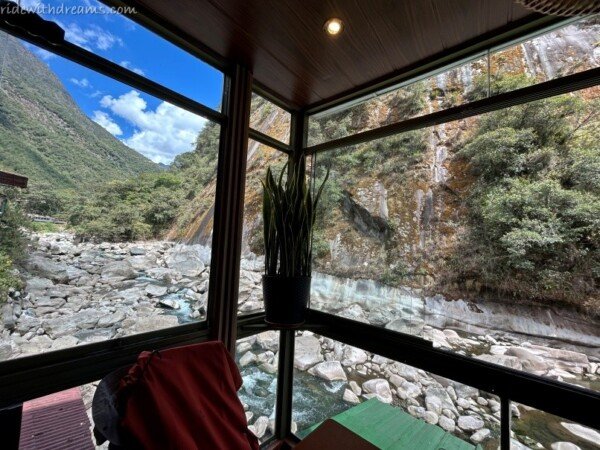
I thought it would be a boring ride back, but this was no ordinary train. It had huge windows all around—even in the roof!
The scenery outside was spectacular, with the Andes mountains and the river flowing alongside the tracks.
After five days of hiking through completely different landscapes, watching the mountains pass by through the train windows felt like the perfect ending.
Goodbye, Salkantay
After spending five days together, I had gotten to know my fellow trekkers quite well. They came from France, America and Australia, and each had completely different stories and personalities.
Somehow, our little group had become almost like a family.
So saying goodbye was surprisingly emotional.
Looking back, I’m very glad I chose the SALKANTAY TREK instead of simply visiting MACHU PICCHU.
It was exhausting. It was cold. It was wet. I rode a horse because I was too tired to climb. I slipped in the snow. I got attacked by sandflies. I walked along a railway for three hours wondering when it would end.
But I also crossed spectacular mountains, saw snow-covered Andes peaks, discovered LLACTAPATA, walked through the Cloud Forest, ate some of the best food of my entire trip, made new friends and finally stood in front of MACHU PICCHU.
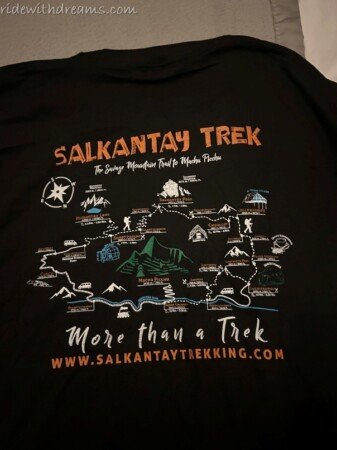
And then, at the very end, my guide Fredy handed me my SALKANTAY TREK completion certificate, with my name printed on it.
After everything we had been through together, seeing my name on that little certificate was unexpectedly emotional.
I was almost in tears.
What an unforgettable five days.