Oct. 2026
A MOUNTAIN OF SPIRITUAL SIGNIFICANCE
Rising to 1,984 meters above sea level, GASSAN (月山) is one of the most famous mountains in Yamagata Prefecture, in Japan’s Tohoku region. Its name means “Moon Mountain,” and its broad, graceful ridgeline stretches across the sky. But Gassan is more than just a beautiful mountain—it is also a place where nature, history, and spirituality come together.
Gassan is one of the THREE SACRED MOUNTAINS OF DEWA SANZAN, together with Mount Haguro and Mount Yudono. For centuries, these mountains have attracted yamabushi, mountain ascetics who practice Shugendo, a Japanese spiritual tradition rooted in mountain worship and influenced by Buddhism and Shinto. Here, mountains are not merely landscapes to explore, but places of spiritual transformation.

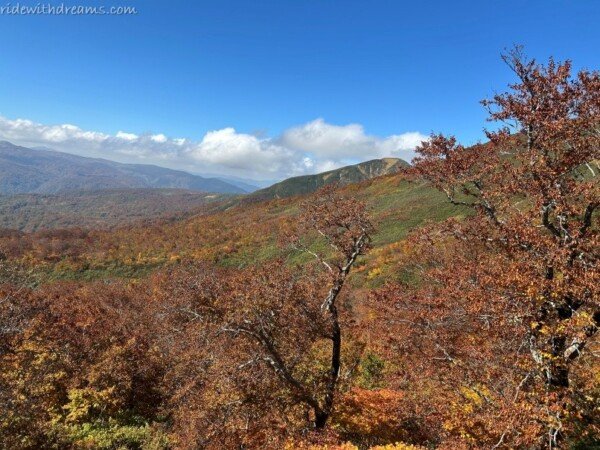
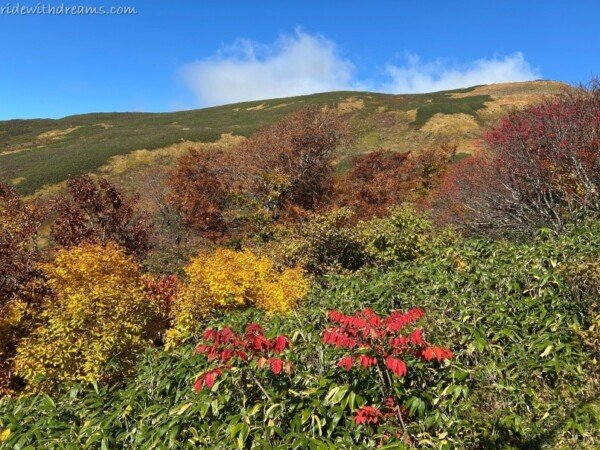

AUTUMN COLORS ABOVE THE CLOUDS
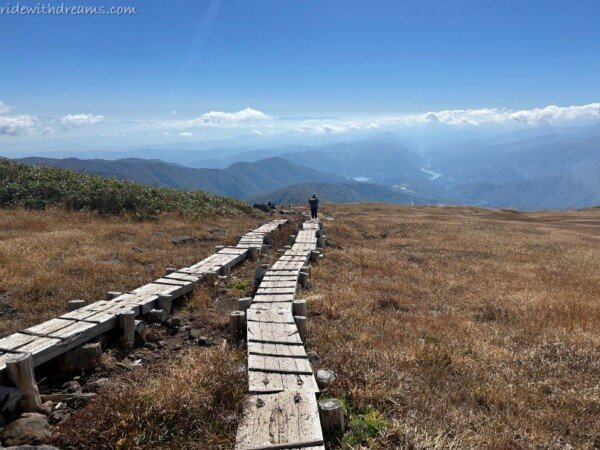
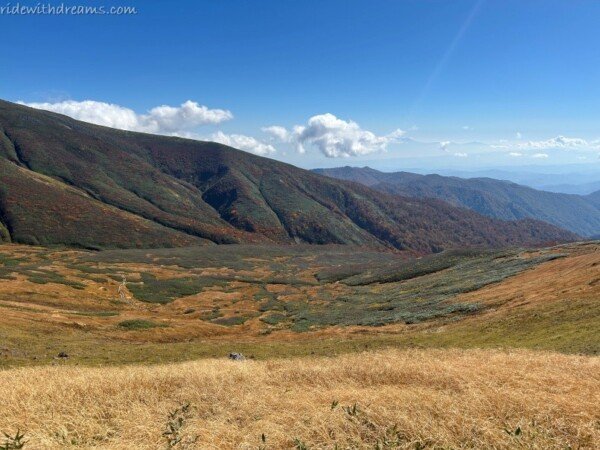
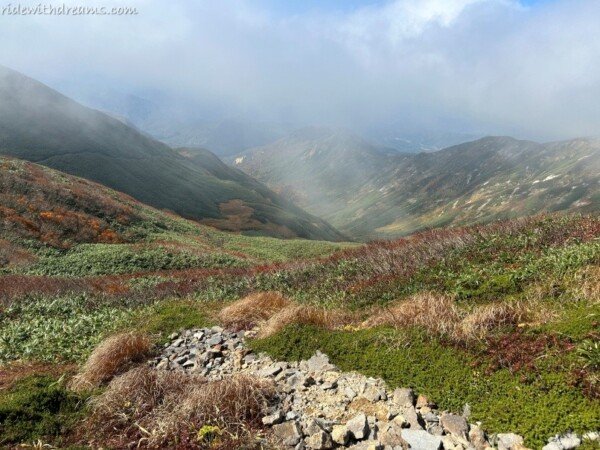
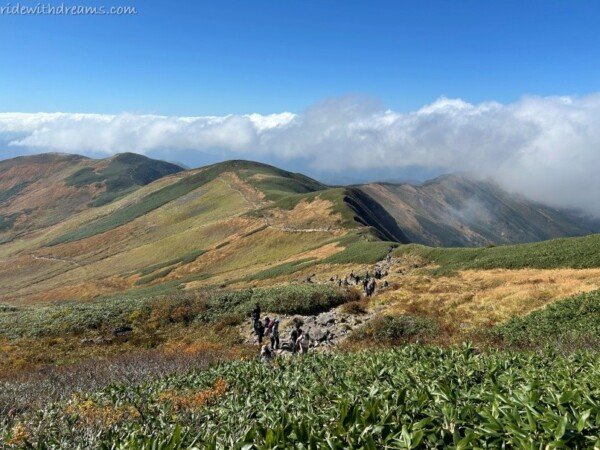
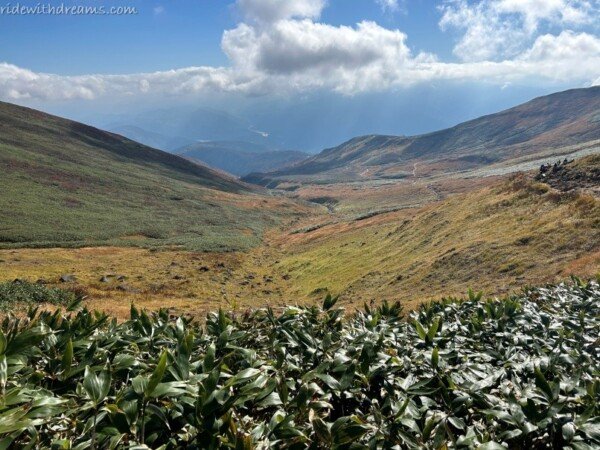
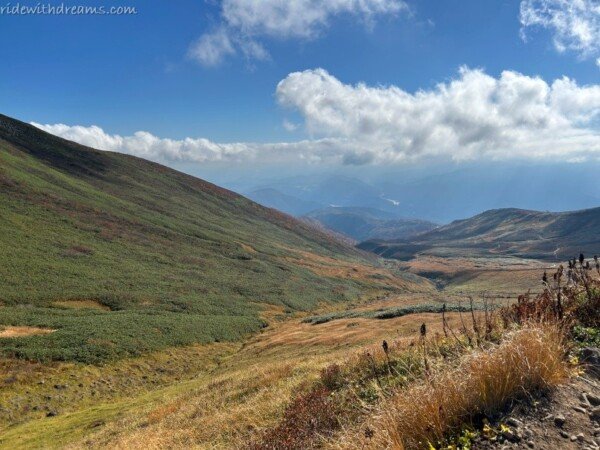
Unlike the sharp, rocky peaks of the Japanese Alps, Gassan has a broad, rolling profile, with expansive grassy slopes and alpine vegetation. In summer, its mountainsides are covered in lush greenery and colorful wildflowers. As autumn arrives, the landscape changes dramatically, with golden grasses and reddish-brown vegetation painting the higher slopes in warm seasonal colors.
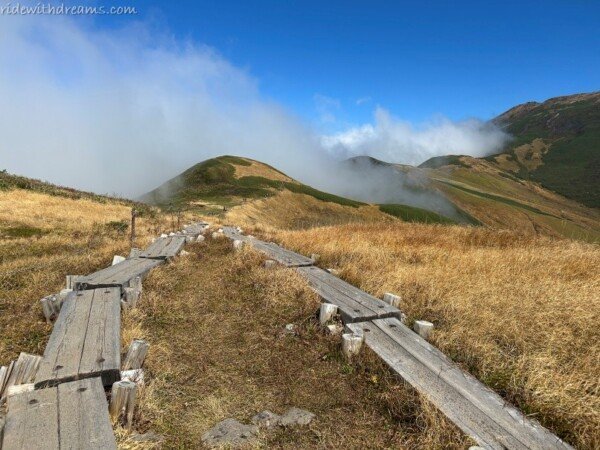
Autumn hiking here has a special charm. The air is crisp, the mountain views stretch across the Tohoku region, and the open ridgelines create a wonderful sense of space. But Gassan’s weather can be unpredictable, and clouds and fog can quickly transform the scenery, giving the mountain an atmospheric, almost mysterious appearance.
GETTING THERE — A RACE AGAINST THE CLOCK
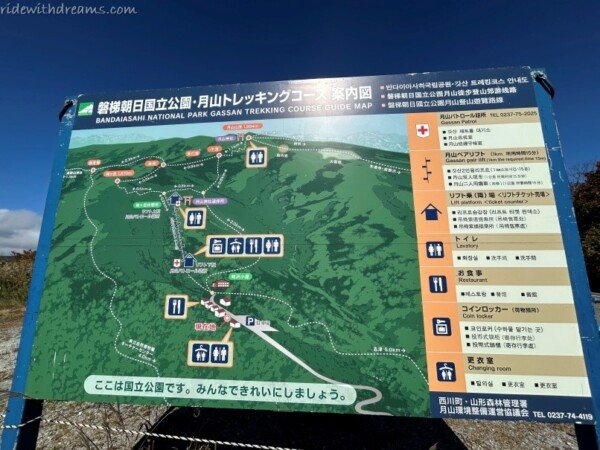
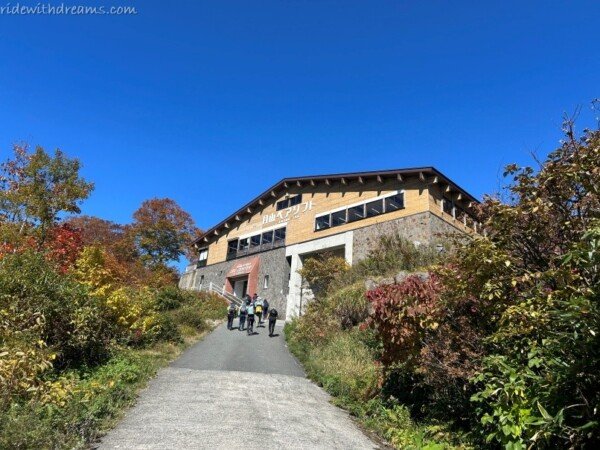
Getting to Gassan turned out to be an adventure in itself. We had to park our car at a distant parking lot and take a minibus for another 15–20 minutes along winding mountain roads to reach the pair-lift boarding area. Even then, we weren’t quite there yet! The lift station was still a 10–15-minute walk away, including a seriously steep uphill section.
The biggest challenge, however, was the schedule. Despite autumn being peak hiking season, the bus and pair lift stopped operating in the late afternoon, at around 4:30–5:00 PM. We ended up waiting at least half an hour for the minibus, so by the time we finally reached the lift entrance, it was already almost 10 AM.
That was later than we had hoped. We now had to keep a close eye on the time and make sure we returned before the lift stopped running. Otherwise, we might have had to walk all the way down the mountain—not exactly the kind of bonus hike we were looking for!
THE PAIR LIFT — AUTUMN FROM ABOVE
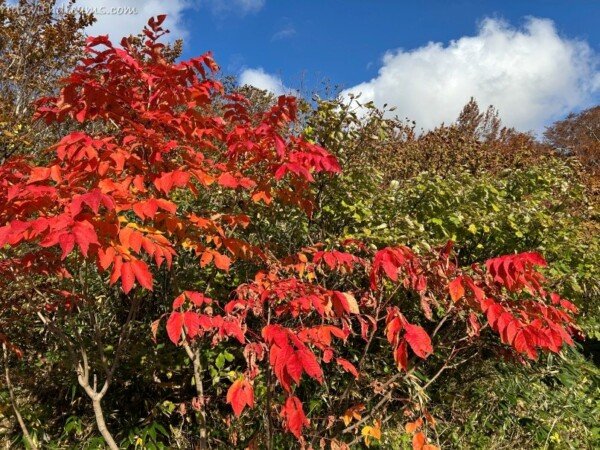
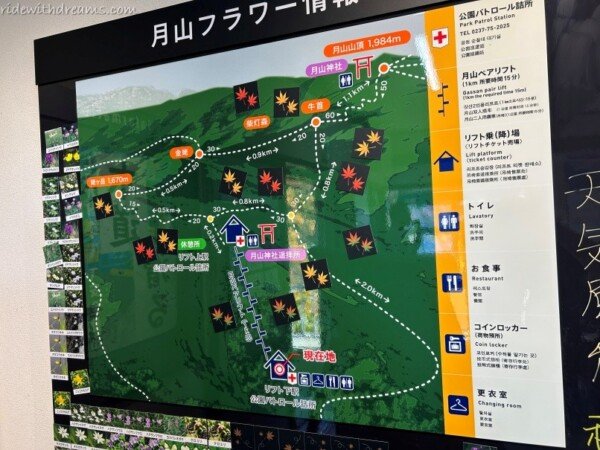
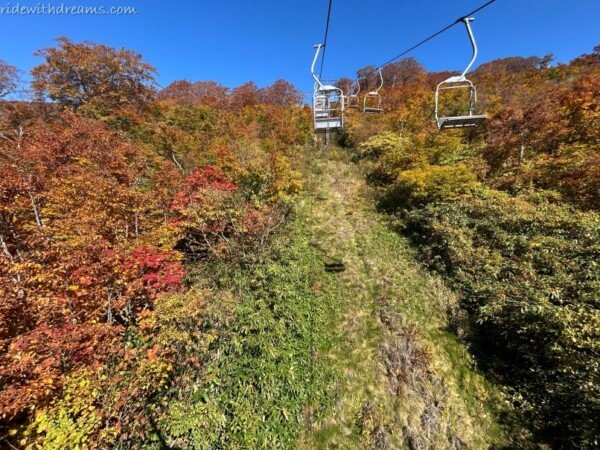
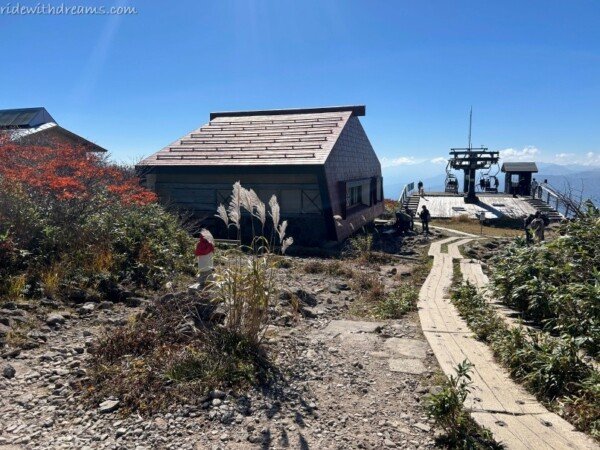
Fortunately, the pair lift ride itself was a highlight. It was surprisingly long, giving us plenty of time to enjoy the autumn scenery unfolding along the mountainside. Colorful foliage spread across the slopes, creating a beautiful patchwork of seasonal hues.
We also noticed quite a few visitors who had no intention of climbing to the summit. They simply took the lift up and wandered around the area, enjoying the autumn views without committing to a full hike. It was easy to see the appeal.
Wooden boardwalks made it possible to explore parts of the area without tackling steep or rocky trails. We actually took this easier route on our way back, and it was a lovely way to enjoy the scenery at a more relaxed pace after the climb.
If you’re visiting mainly for the autumn colors rather than the summit, this could be a perfectly good option. After all, not every mountain visit has to involve a race to the top!
A STEEP CLIMB INTO THE CLOUDS
For those determined to reach the summit, however, the easy walking paths don’t last long. Once we left the gentler terrain behind, the trail quickly turned into a series of steep, rocky steps and uphill sections.
The good news was that the climb wasn’t particularly long. The bad news? It was steep enough to make us work for it!
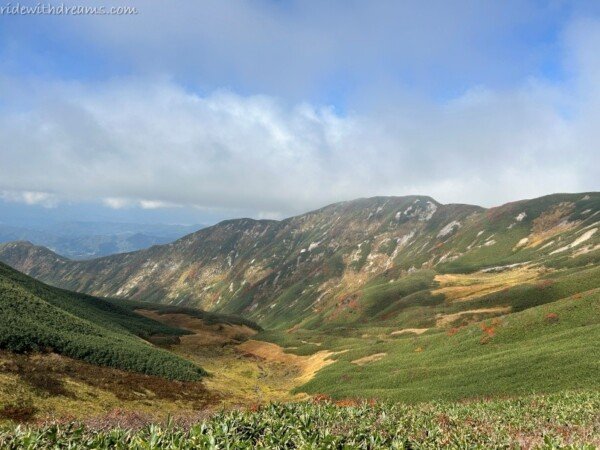
As we climbed higher, the scenery became increasingly dramatic. Green hills, colorful autumn foliage, and thick white fog blended into a constantly changing landscape. Clouds drifted across the ridgeline, sometimes partially swallowing the mountain around us. It felt as though we were climbing straight into the clouds.
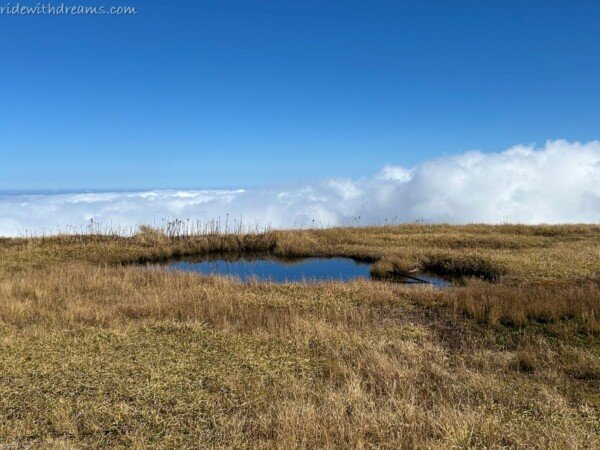
The summit itself was rather modest. There was a small shop and a little pond nearby, but not much else in the way of summit facilities or grand landmarks. The real attraction was the surrounding mountain scenery, especially the way the clouds wrapped around the peaks and gave everything an almost dreamlike atmosphere.
With the lift closing time still hanging over our heads, we couldn’t linger for long. We hurried back down and, thankfully, made it to the lift station before 3 PM—well ahead of the deadline. That was a relief!
AN AUTUMN HIKE WITH A LITTLE ADVENTURE
Gassan offered a different kind of autumn hiking experience. Rather than simply following a trail through colorful forests, we had to navigate mountain transport schedules, tackle steep rocky slopes, and contend with clouds that seemed to swallow the landscape around us.
The climb was demanding in places, but the combination of golden autumn vegetation, rolling green hills, and mist-covered peaks made it worthwhile. And for anyone who prefers a more leisurely outing, the pair lift and wooden boardwalks provide a way to enjoy the scenery without climbing all the way to the summit.
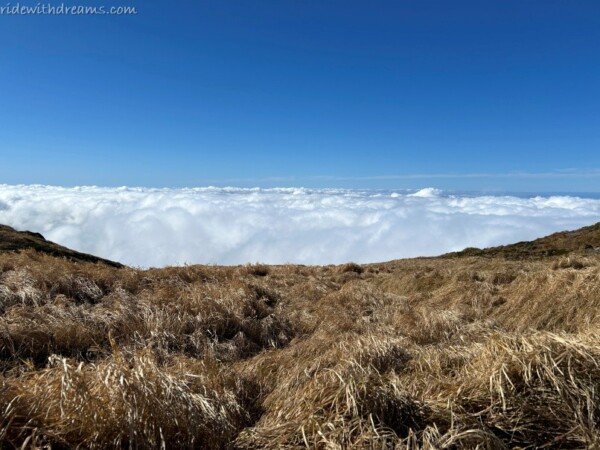
Gassan is famous not only for its natural beauty but also for its spiritual significance as one of Japan’s sacred Dewa Sanzan mountains. Although our visit was more about hiking and autumn colors than spiritual reflection, there was something special about standing high above the surrounding landscape, surrounded by clouds and silence.
In the end, Gassan reminded me that a memorable mountain adventure isn’t always about reaching a spectacular summit. Sometimes, it’s the changing scenery, the unexpected challenges, and the moments when the clouds roll in that make the journey worthwhile.