Jan. 2026
Where we stayed:
- The Taj Vista Agra
Where we visited:
- Agra Fort
- Anguri Bagh
- Jahangir Palace
- Taj Mahal
- Amar Singh Gate
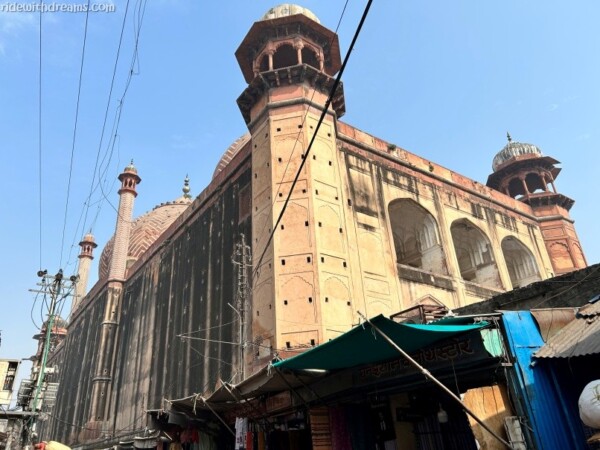
- Shahi Jama Masjid Agra
- Sadar Bazar
Agra: Where History Lives and Breathes
Agra, home of the world-famous Taj Mahal, is a city where history and grandeur seamlessly blend into everyday life. Renowned for its breathtaking Mughal architecture, Agra attracts travelers eager not only to admire its iconic monuments but also to experience the vibrant culture that surrounds them.
Compared to Delhi and Jaipur, Agra is a much smaller city, yet it is still well connected, with two railway stations. We arrived via Agra Fort Station, the closest to the historic center, and later departed from Agra Cantt, a much more remote station.
Where We Stayed: A Quiet Corner Near the Taj
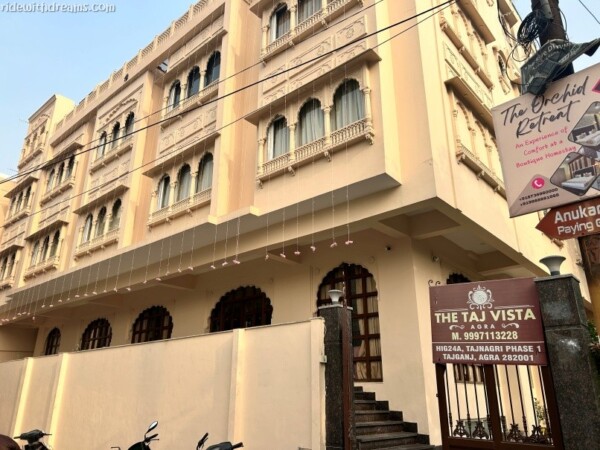
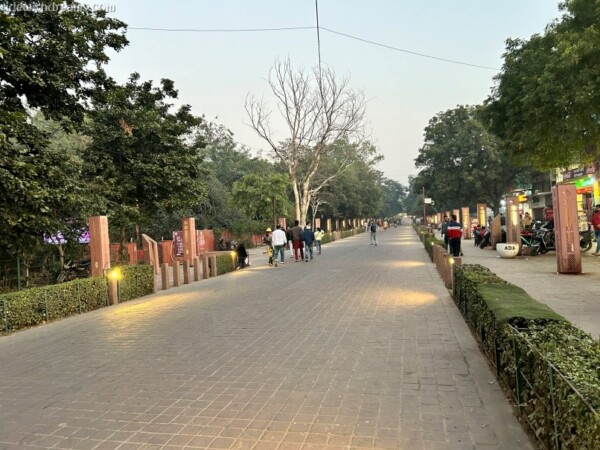
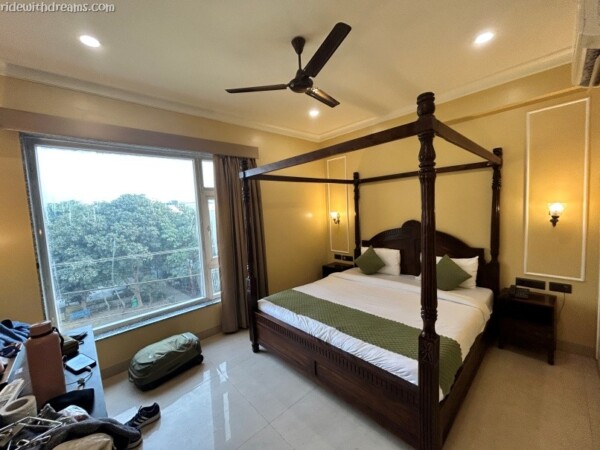
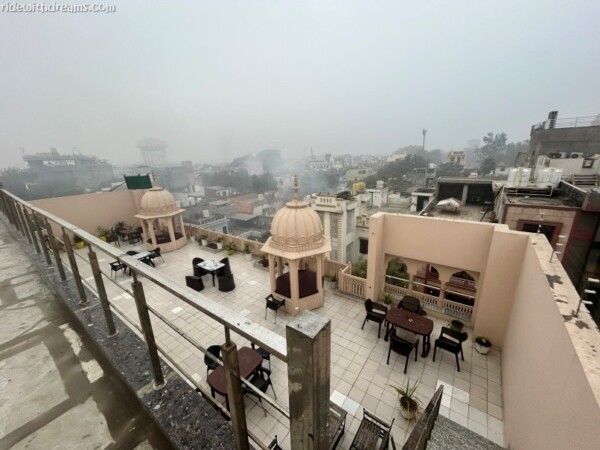
We stayed at The Taj Vista Agra, a relatively new and well-equipped hotel. While technically walkable to the West Gate of the Taj Mahal, the distance was longer than expected. That said, the walk took us through a quiet and pleasant road, away from the city’s heavy traffic.
Being on the calmer side of town turned out to be a blessing—fewer crowds, less noise, and an easier stroll to nearby shops and restaurants made the area surprisingly enjoyable.
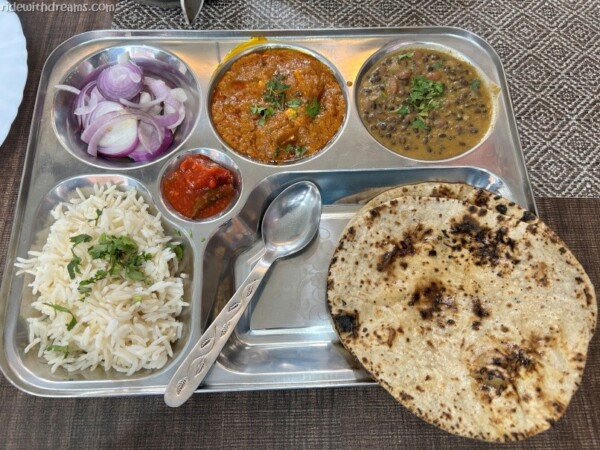
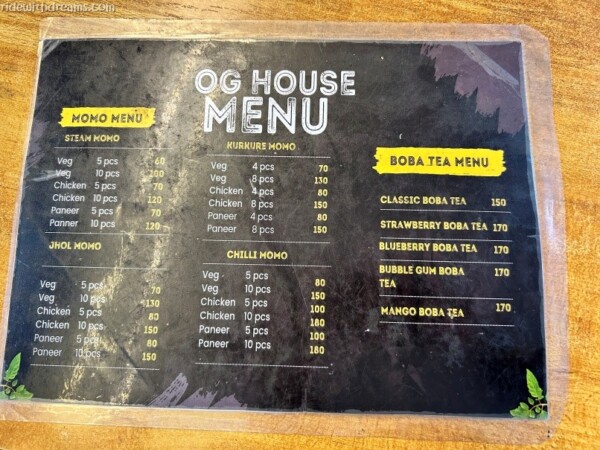
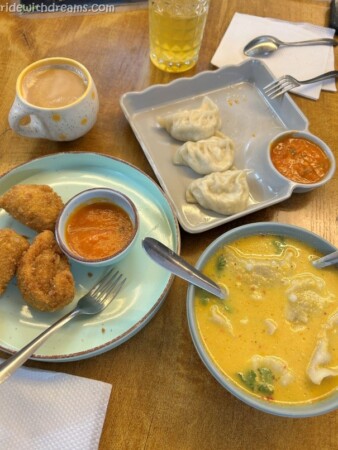
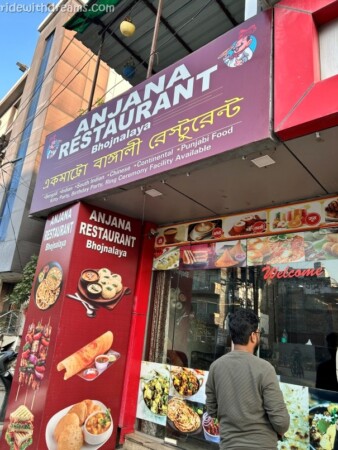
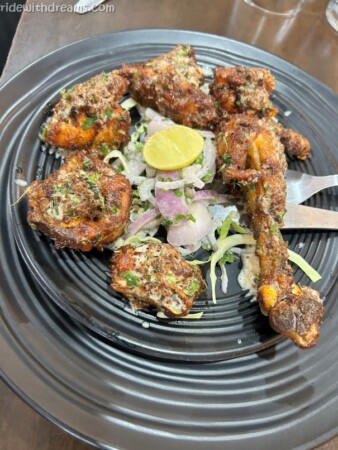
We found a great momo restaurant run by two young Nepalese brothers, whose warm, friendly smiles made the place feel instantly welcoming. We also found an Indian restaurant serving surprisingly delicious Afghan-style chicken. We ordered half a chicken at first, then immediately ordered another half—and finished every bite.
Planning the Visit: A Flexible Start to the Day
Buying entrance tickets online turned out to be more complicated than expected, so we opted for a half-day private tour covering both the Taj Mahal and Agra Fort, including entrance tickets and transportation.
Originally, our guide planned to pick us up at 6:00 AM to watch the sunrise at the Taj Mahal. However, the early-morning fog was thick, and after some discussion, we delayed the pickup to 8:00 AM and chose to visit Agra Fort first.
In hindsight, this was the perfect decision.
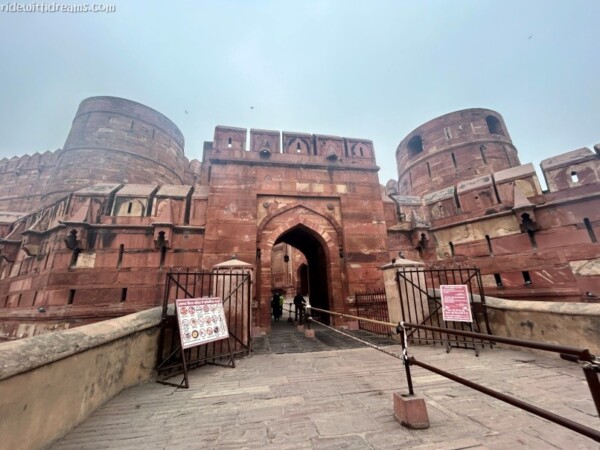
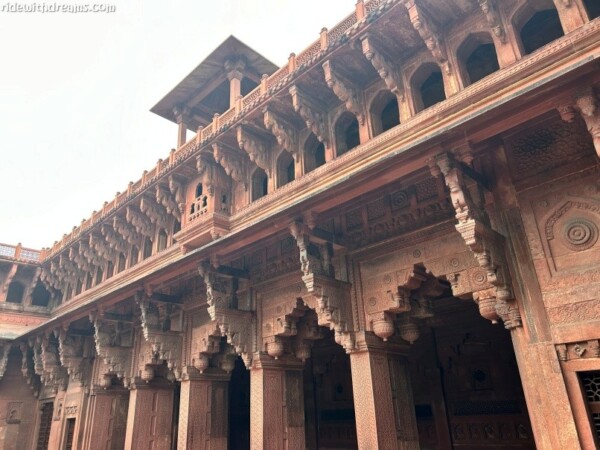
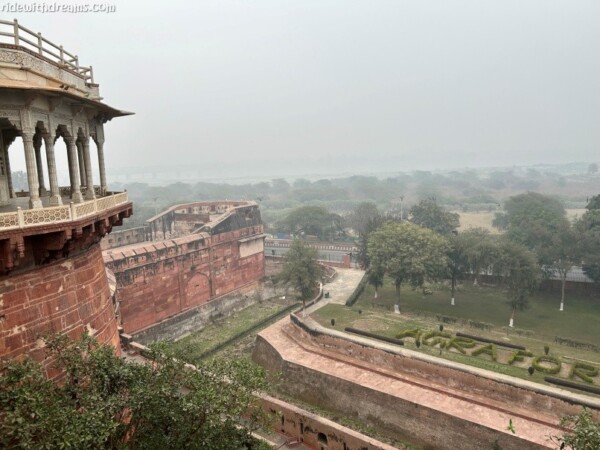
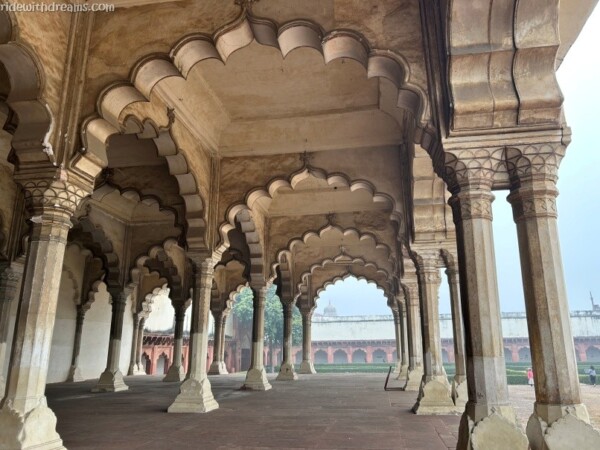
Agra Fort: Peaceful Mornings and Marble Artistry
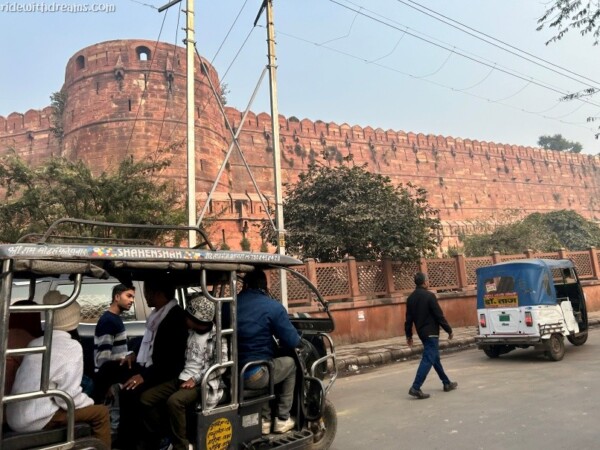
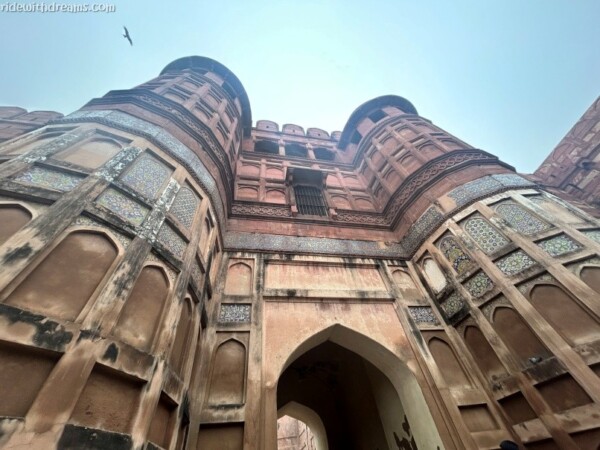
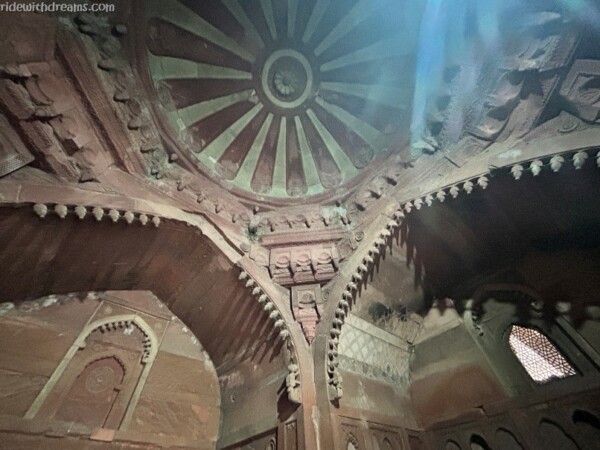
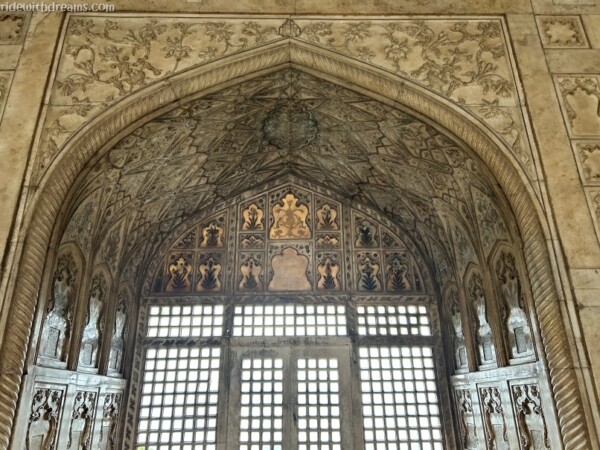
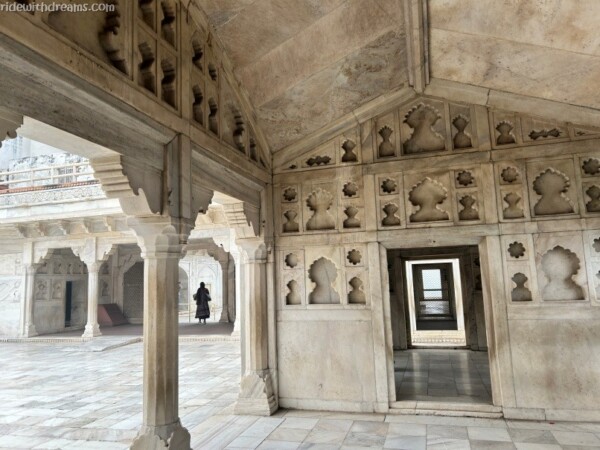
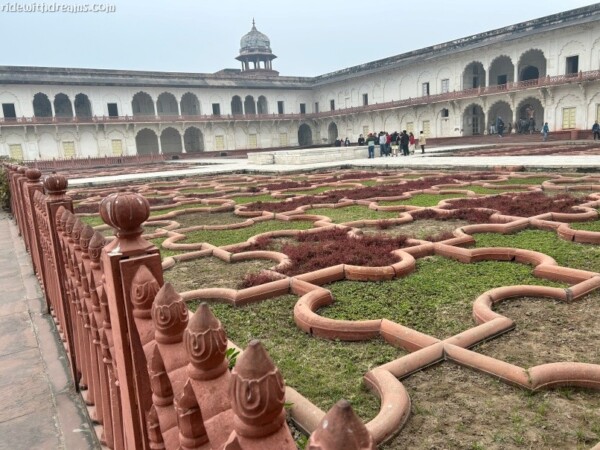
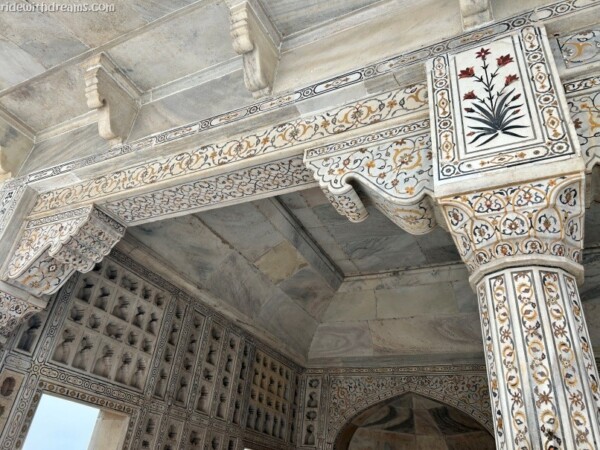
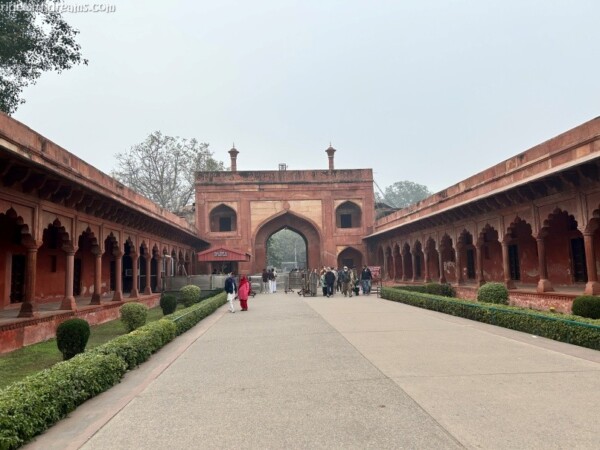
Arriving at Agra Fort early in the morning, we found the complex peaceful and serene, with beautifully maintained gardens bathed in soft light. I was especially drawn to the intricate white marble walls, inlaid with colorful gemstones forming delicate floral patterns.
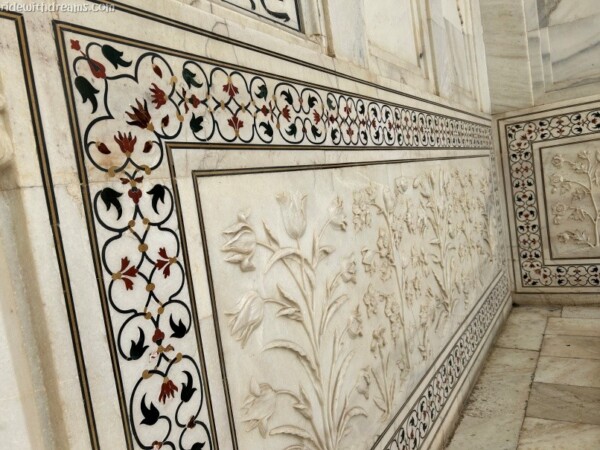
This pietra dura technique—embedding semi-precious stones into marble—is one of the most distinctive art forms I’ve seen in India, and something I hadn’t encountered in other Islamic countries nearby. The craftsmanship was simply mesmerizing.
The Taj Mahal: A Monument That Changes With the Light
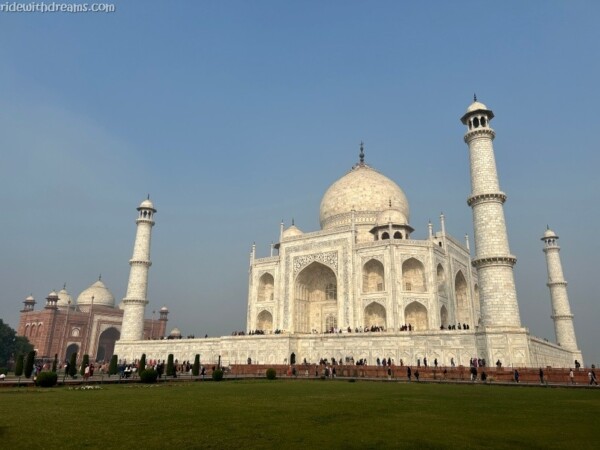
By the time we reached the Taj Mahal, the fog had slowly lifted and the sun emerged, revealing the monument in breathtaking clarity—perfect for photographs and quiet admiration.
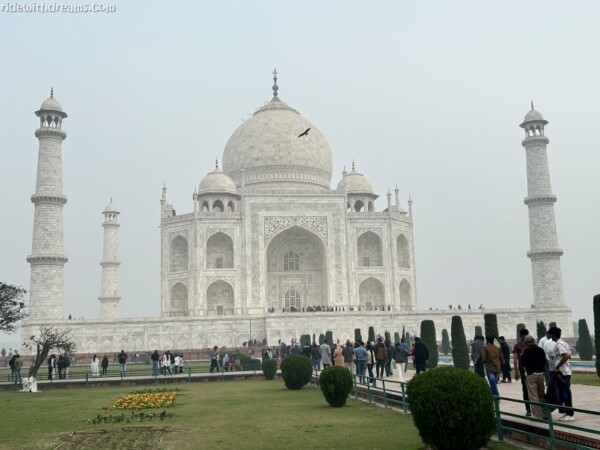
Widely celebrated as one of the finest examples of Mughal architecture, the Taj Mahal blends Persian, Islamic, and Indian design traditions into a harmonious masterpiece. At its heart stands the central mausoleum, built entirely of gleaming white marble that appears to change color throughout the day—soft pink in the morning, milky white under the sun, and golden beneath moonlight.
The structure sits on a high square platform, perfectly symmetrical on all sides. Its most iconic feature is the grand onion-shaped dome, rising approximately 73 meters (240 feet), flanked by four smaller domes. At each corner of the platform stands a slender minaret, intentionally tilted outward to protect the mausoleum in the event of an earthquake.
The exterior is richly decorated with intricate floral and geometric inlays made from lapis lazuli, jade, and turquoise, while elegant Qur’anic calligraphy frames the arches—cleverly scaled so the text appears uniform from ground level. Unfortunately, photography is not allowed inside, but the interior is said to be just as breathtaking.
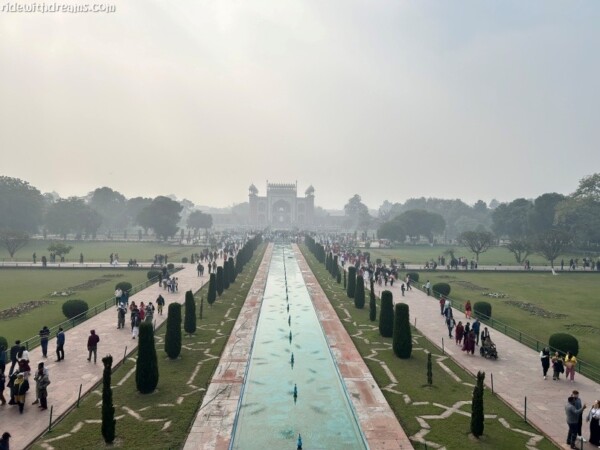
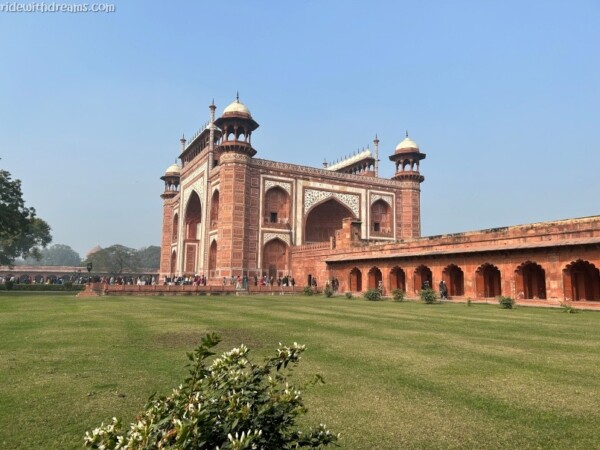
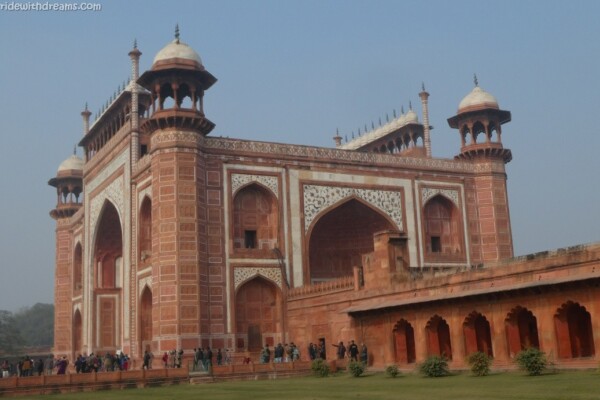
Beyond the mausoleum, the complex includes a majestic red sandstone gateway, a mosque, a matching guest house (jawab), and expansive Charbagh gardens, divided by reflective water channels symbolizing paradise in Islamic tradition. I found the red sandstone mosque nearly as impressive as the Taj itself, and we spent a long time wandering the gardens and admiring the architecture.
Sadar Bazar: A Glimpse of Everyday Agra
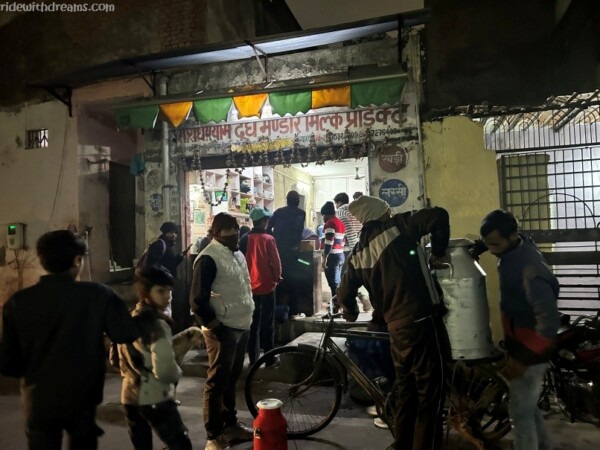
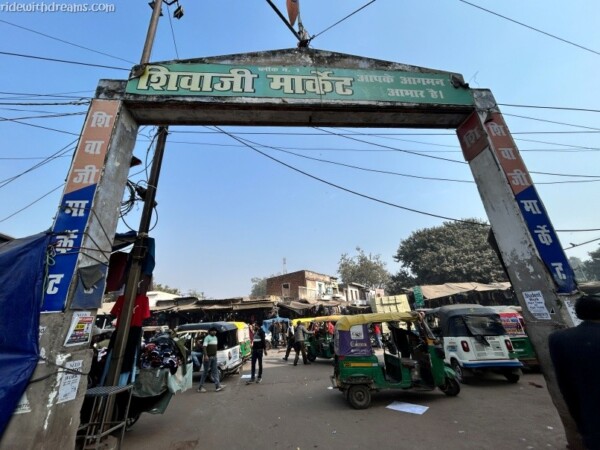
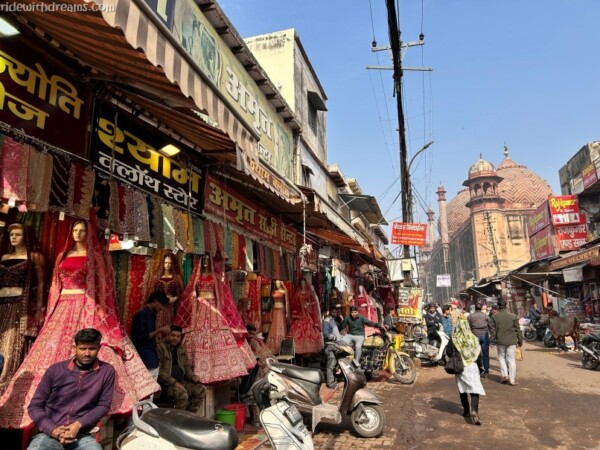
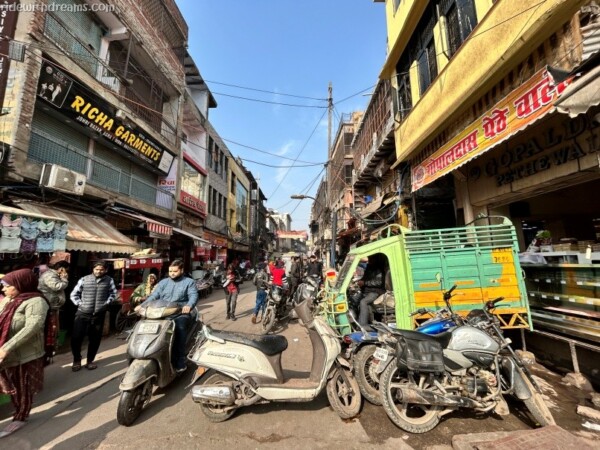
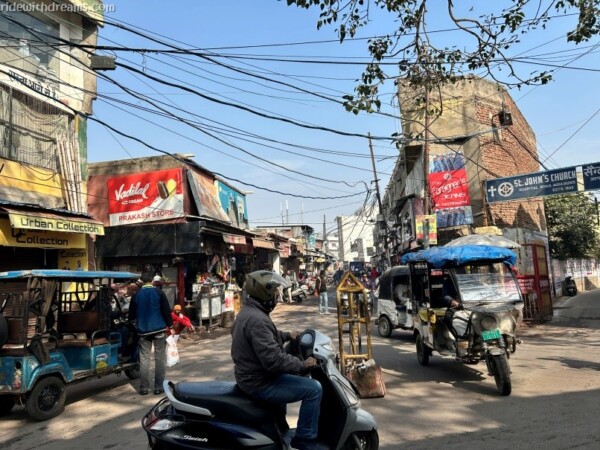
After sightseeing, we took an auto to Sadar Bazar, a lively local market near Agra Fort Station. The area was buzzing with people preparing for the New Year—cows wandering the streets, autos honking, cars squeezing through narrow lanes, and shoppers everywhere.
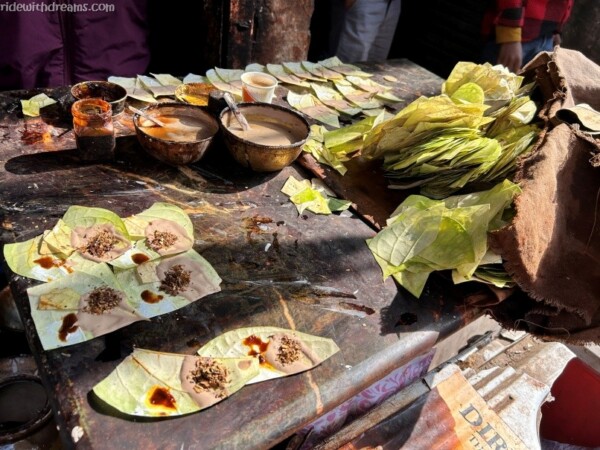
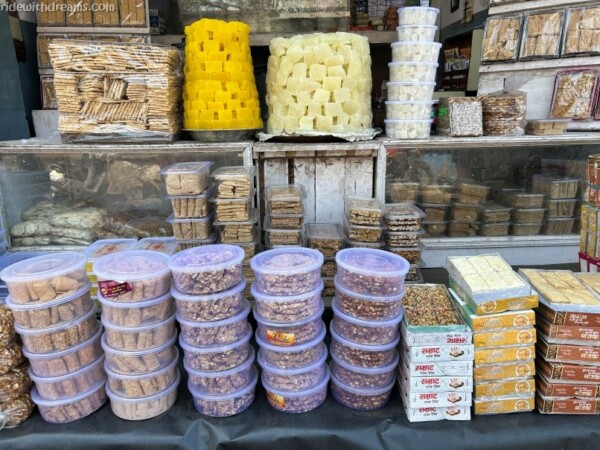
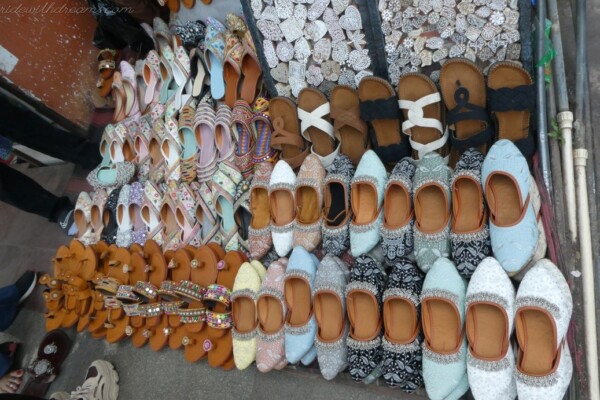
The market was a maze of small shops selling daily necessities, street food, wedding attire, traditional clothing, and handicrafts. One street was dedicated entirely to Indian sweets, lined with open workshops where men worked bare-chested, hand-making desserts in full view of passersby. Another street specialized in traditional shoes, locks, kitchenware, and household items.
Traditional Indian shoes have a uniquely distinctive shape that perfectly complements traditional costumes. When I saw the shoe shops lining the streets, I immediately thought of the young auto driver we’d chatted with earlier, who had mentioned that his family owned a shoe shop.
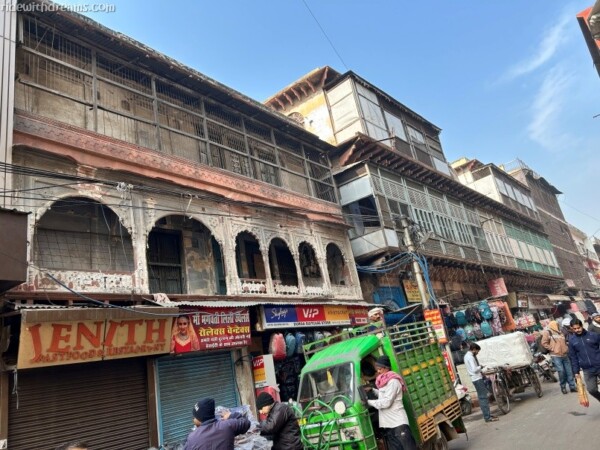
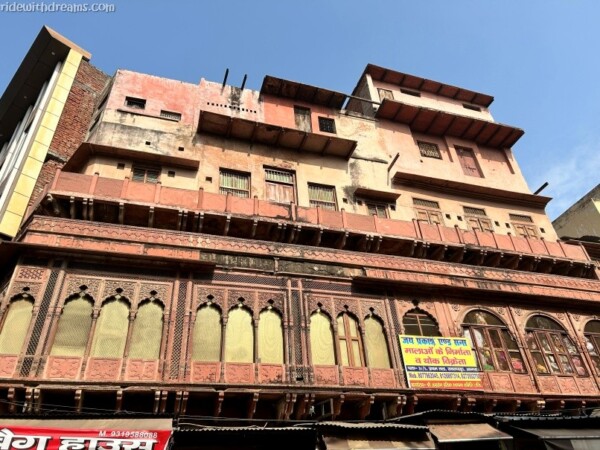
The buildings around the bazaar were very old—torn, weathered, and poorly maintained. Many of them looked as if they might fall apart at any moment. Yet, despite their fragile appearance, I couldn’t help noticing the beautiful details etched into their facades.
Faded balconies, decorative arches, and timeworn carvings hinted at a past elegance. These structures must once have known more glorious days—perhaps during the British colonial period—when they stood proud and full of life, long before time and neglect softened their grandeur.
I bought two tiny, round Indian locks as souvenirs—simple but beautifully unique. To my surprise, the shopkeepers were incredibly fair, charging me the same price as locals without any attempt to overcharge because I was a foreigner.

The Realities of Travel
Despite its charm, Sadar Bazar lacked basic tourist facilities. There were no decent cafés or restaurants, and the only public toilet I could find was a dirty backstreet facility meant only for men. In the end, I had to flag down an auto-rickshaw and return to our hotel just to use the restroom—a reminder of the practical challenges that often come with traveling in India.
A Surprise Find Near the Hotel
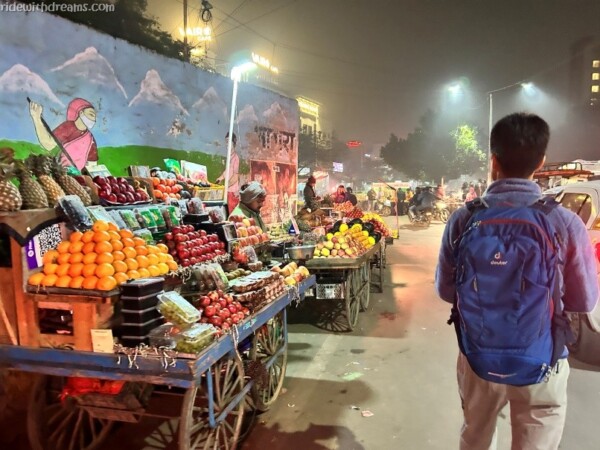
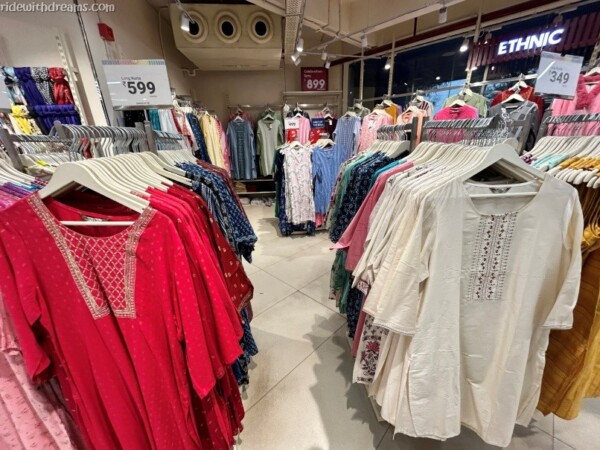
Later, while wandering near our hotel, we unexpectedly discovered a small complex with local chain clothing stores and a supermarket—a rare find in India. We spent quite some time shopping there and even tried to locate similar stores in New Delhi later on. These places turned out to be excellent spots for picking up souvenirs and everyday items.
As we wandered through the local streets, we often came across children playing and laughing—some selling small items, others helping their parents with household chores. Many of them were shy at first, yet incredibly sweet. They smiled at us, waved, said hello, and sometimes even followed us for a short while, clearly curious about foreigners.
I couldn’t help but adore them. There was a purity in their joy that felt rare and deeply touching—so different from children in more developed countries, often weighed down by heavy schoolbags and absorbed in mobile phones and games. Their laughter felt unfiltered, their curiosity genuine, and those brief encounters stayed with me long after we left the streets behind.
Conclusion: Agra, in All Its Contrasts
Agra is a city of striking contrasts—timeless beauty and daily chaos, grand monuments and humble streets, quiet mornings and bustling markets. While the Taj Mahal alone is worth the journey, it’s the moments beyond the postcard views—wandering through bazaars, chatting with local vendors, and navigating everyday challenges—that truly bring the city to life.
Agra may be small, but its stories, craftsmanship, and cultural richness leave a lasting impression long after you leave its marble wonders behind.